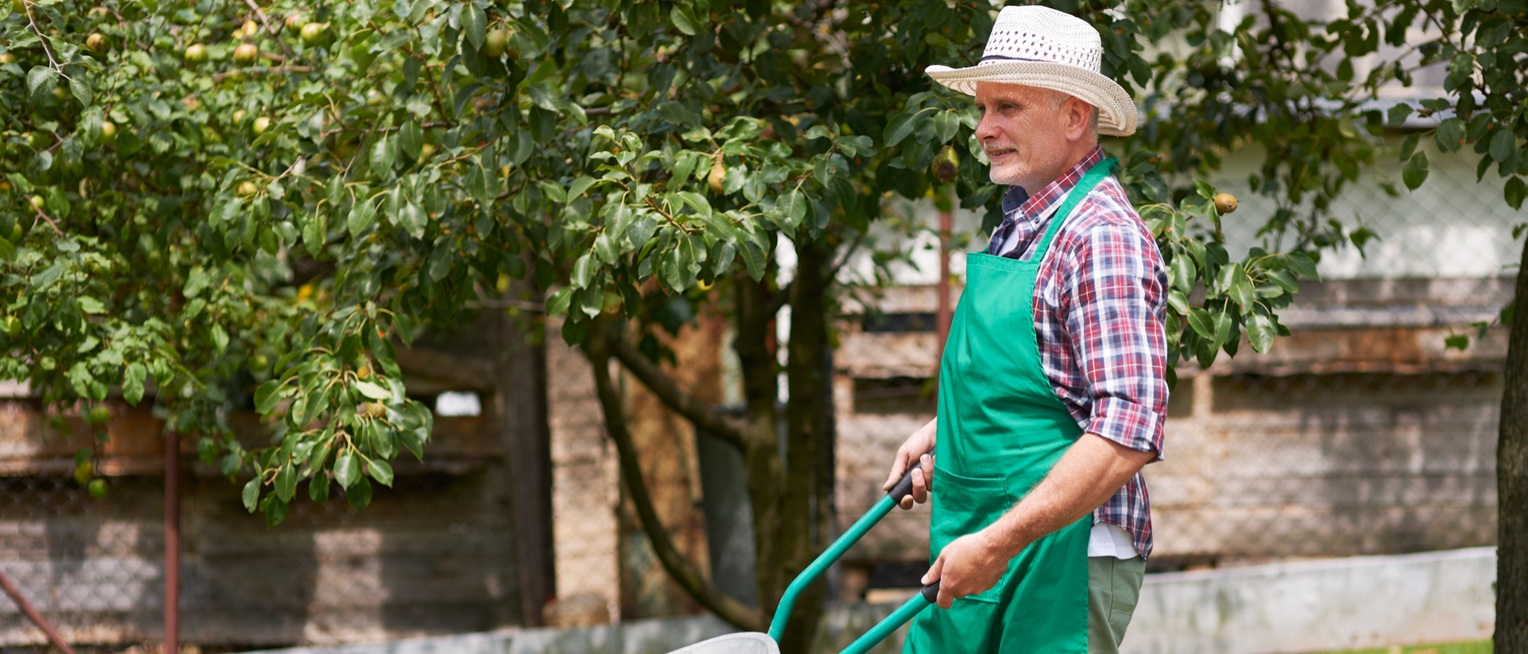
My name is Christopher Hayes, and most days I can tell the hour by what the hospital smells like.
I know that seems like an odd way to begin, but bear with me. After thirty-two years flying commercial jets across the country, I developed a habit of anchoring myself to sensory details because the alternative, letting your mind drift into abstraction at thirty-seven thousand feet, is not an option. The cockpit teaches you to be present. Every gauge, every reading, every sound matters. You either notice things or you don’t, and the ones who don’t eventually pay for it.
I was sixty-one years old when Gary Thompson called me from my front yard on a quiet Tuesday morning, and I had just finished my second cup of coffee when my phone rang with his number on the screen. Gary had mowed our lawn every Tuesday for six years. Steady and reliable. He had never once called unless something was genuinely wrong.
“Mr. Hayes,” he said, and his voice carried that careful, apologetic tone people use when they’re afraid of troubling you. “I’m real sorry to bother you, but there’s something out here I think you should hear.”
My hand went still around the mug.
“There’s crying,” he said quietly. “Coming from your basement. It’s been going on a while now. Real soft, like somebody who doesn’t want to be noticed.”
I moved to the kitchen window. Gary was standing beside his mower on the front path, phone pressed to his ear, staring at the narrow basement windows just above ground level. My daughter Cassandra had left for her downtown gallery forty-five minutes earlier. The house was empty except for me.
“I’ll check it out,” I said.
I descended the basement stairs slowly, one hand on the railing. Sixteen steps. I’d walked them thousands of times over twenty-three years in this house, the two-story colonial on Ashford Lane that Margaret and I had bought when Cassandra was nine and Felicia was four. Back when the girls’ laughter echoed through these rooms and Margaret hummed softly while watering herbs by the back window. That life belonged to another era now. Margaret had been gone for ten years. Felicia had vanished eight years ago, disappearing one March night at nineteen and leaving behind nothing but unanswered questions and a hollow ache that never quite healed.
Now it was just me and Cassandra. My eldest, thirty-two, brilliant and driven, who had turned the basement into a jewelry studio and built a business that would have made her mother proud. She left for the gallery every Tuesday at seven, kissed my cheek, reminded me to take my vitamins.
At the bottom of the stairs I stopped and listened. Nothing. Just the furnace hum and the faint buzz of the fluorescent lights. I opened the studio door and flipped on the light.
Everything looked normal. The worktable stretched across the center, tools arranged with the meticulous care I associated with Cassandra’s whole approach to life. Display cases lined the walls, silver pendants and gold chains catching the overhead light. Custom pieces that had earned her a loyal collector base.
But something was wrong in a way I couldn’t immediately name.
I stepped closer to the worktable and noticed a drinking glass on the corner, condensation still beading on its sides. I touched it. Cold. Recently filled. The wall clock read 7:43. Cassandra had left at seven. The small sink in the corner had a damp faucet handle. A faint scent of lavender soap lingered in the air.
Then my eyes settled on the back wall.
The paint matched the rest of the studio, the same dove gray Cassandra and I had rolled on together five years earlier, working side by side for weeks. But the texture was subtly different. Smoother. Newer, as if someone had patched and repainted it sometime after we finished.
I pressed my palm flat against it and knocked lightly. The sound came back hollow.
“Mr. Hayes?”
I turned. Gary stood at the foot of the stairs, gloves twisted in his hands. He wasn’t the type to imagine things.
“Find anything?”
“Just a quiet studio,” I said, though the words felt wrong as I said them.
“I heard it clear,” he said. “A woman crying, soft like she was trying not to be noticed.”
Neither of us believed the studio was empty.
Then I heard it. Footsteps above us. Heels clicking on the hardwood. Cassandra came down the stairs with surprise flickering across her face when she saw Gary and me standing there together.
“What’s going on?” she asked.
“Gary heard something while he was mowing,” I said. “We were checking it out.”
“Crying,” Gary added apologetically.
Cassandra laughed lightly. “Oh, that must have been my podcast. True crime, lots of emotional interviews. I must have forgotten to shut it off. It’s on a timer.” She touched Gary’s arm briefly. “I’m so sorry I worried you both.”
She’d forgotten her presentation portfolio, she explained. She retrieved it, apologized again to Gary, and left. From the kitchen window I watched her Audi disappear down Ashford Lane. Gary resumed mowing.
I should have packed for my Seattle flight. Instead, I went back downstairs.
The soap smell was recent. The water glass was still cold. Cassandra hadn’t worked late last night. I’d heard her come home at six, and I would have heard her go back downstairs later, because the fifth step always creaked. Every time.
I knocked on the back wall again. Hollow.
My phone buzzed. A text from Cassandra.
Thanks for covering, Dad. Love you.
Covering. I stared at that word for a long moment. Then I typed back that I loved her too and stood there holding that cold glass while Gary’s words turned over and over in my mind.
Sleep didn’t come that night. I lay in the bed Margaret and I had shared for eighteen years before she passed, watching the digital clock move from eleven to midnight to one-fifteen, listening to the oak trees outside and thinking about how I had convinced myself over the years that everything was normal.
Because there had been signs. I saw that clearly now, lying in the dark with nothing to distract me from the adding-up of things I had allowed to stay separate.
Three years ago, sounds from the basement at two in the morning. Cassandra said it was new equipment.
Two years ago, our grocery bills nearly doubled. She said it was client refreshments.
A year ago, I found her in the kitchen late at night loading a tray with sandwiches, fruit, and bottles of water. Working late, she’d said, and carried the tray toward the basement stairs while something tightened in my chest and I said nothing.
What if Felicia had never left?
I sat up hard in the dark, the room tilting. I gripped the mattress and grabbed my phone and opened my notes and started writing it all down in a list because listing things was how I had always processed crisis, how the cockpit had trained me to think, evidence first.
The crying. The water glass. The fresh paint on a wall that sounded hollow. The late-night sounds. The doubled groceries. The food carried downstairs. And beneath all of it, a question I had been too afraid to let fully form for eight years.
What if she was never gone at all?
I called Steven Harper the next morning. My oldest friend and the lawyer who had helped me update my will after Margaret died and set up the trust fund we had created for Felicia when she was sixteen. Five hundred thousand dollars from Margaret’s insurance and savings, with Felicia to gain access at twenty-one. When Felicia disappeared, I had made Cassandra temporary trustee. She was responsible. I had trusted her completely.
Steven’s voice on the phone was careful in a way that scared me before he said a single specific thing. He’d been reviewing the trust account on a routine basis and found something that required an in-person conversation. He met me at his office in forty minutes.
He spread documents across his desk. Bank statements, transaction logs, spreadsheets dense with numbers. The trust had been drained, methodically and relentlessly, over eight years. Starting two weeks after Felicia disappeared.
One hundred and fifty thousand dollars transferred in the first three months to a man named Derek Hamilton, Cassandra’s boyfriend at the time. Another hundred thousand to a company called J. Morrison Construction in Iowa, labeled as home renovation. Except no permits had been filed at our address in over a decade. No inspections. Nothing recorded anywhere.
“She told me the gallery was funded by loans,” I said.
“She lied,” Steven replied.
I told him everything then: Gary hearing the crying, the water glass, the grocery receipts, the hollow wall. He listened without interrupting. When I finished he exhaled slowly and said the thing I had not yet allowed myself to say aloud: that Cassandra might not just know what happened to Felicia, but might know because she had been the one to make it happen.
“Do not confront her,” Steven said, gripping my shoulder. “Not yet. If Felicia is alive and you tip Cassandra off before we have enough, everything falls apart. You go home and you act normal. Can you do that?”
I thought of Cassandra across the dinner table, smiling. “I can.”
Dorothy Green knocked on my door at 8:15 the following morning. She was seventy-two, a widow who had been Margaret’s friend and brought casseroles after Margaret died, a small woman with white hair and chronic insomnia who had lived next door for fifteen years. She sat on my sofa clutching a canvas bag, her eyes darting toward the door.
“I’ve been keeping track,” she said, and placed three spiral notebooks on the coffee table. Worn at the edges, filled from cover to cover in careful handwriting. She’d started in 2017, she explained. The entries were dated and timestamped, hundreds of them spanning years.
March 15th, 2017, 2:30 a.m.: Cassandra exited basement carrying tray with empty dishes.
July 22nd, 2021, 11:45 p.m.: Heard faint crying from direction of Hayes house. Lasted approximately ten minutes.
October 3rd, 2023, 3:15 a.m.: Cassandra made three trips to basement carrying pillows, blankets, and books.
“In the beginning, two or three times a week,” Dorothy said. “By 2018, four or five times. Always late. Always when you were asleep or out of town.”
I looked at her. “You heard crying?”
She nodded, tears welling. “I called the police in 2019,” she said. “You were on a flight. Two officers came. Cassandra showed them around, explained she ran a business from the basement. They said everything seemed fine and left.”
She twisted her hands together.
“The next day, Cassandra came to see me. She was smiling, but the smile wasn’t friendly. She said, ‘Mrs. Green, sometimes curiosity can be dangerous. I’d hate for anything to disturb the peace of this neighborhood.’”
Dorothy pulled a USB drive from the canvas bag.
“Last year I installed a security camera pointing at your house,” she said. “I know it was an invasion of privacy. But I needed to know if what I was seeing was real.”
I plugged the drive into my laptop. Night-vision footage. Cassandra emerging from the basement at 2:47 a.m. carrying garbage bags and checking the street. Cassandra standing at the basement door in the dark, looking up at Dorothy’s bedroom window to see if she was awake. A dark sedan in the driveway late at night, a man delivering a large box, Cassandra meeting him at the basement door.
Forty-seven videos. Eight years of a woman too frightened to act, watching through her bedroom window and writing it all down.
“Why come forward now?” I asked.
“Because Tuesday morning I heard your landscaper on the phone,” she said. “He’d heard crying too. And I realized if there was another witness, I couldn’t stay silent anymore.”
Riley Summers found me on LinkedIn the same afternoon, a message marked urgent. Felicia’s best friend from college, who had called me every week for the first six months after Felicia disappeared and whose voice had broken on the last message she left me: I can’t keep doing this to myself, Mr. Hayes. I’m so sorry.
I hadn’t heard from her in seven years.
She met me at a coffee shop on Hennepin Avenue with an iPad and the expression of someone who had been carrying something heavy for too long and had finally found someone to put it down in front of. She showed me Cassandra’s jewelry line side by side with photographs of sketches from Felicia’s college portfolio that Riley had kept in a box for eight years.
Fifteen designs. Fifteen perfect matches. The curve of a vine, the spacing of leaves, the way a stem wrapped around a pendant center: identical in every detail.
“Look at the engraving,” Riley said, zooming in on one of the pieces. She traced her finger along the curve of a leaf. Hidden in the negative space, almost impossible to see unless you were looking for it, was a tiny letter F.
“Felicia used to do that,” Riley whispered. “Sign her work with a hidden F. She said: if people care enough to look, they’ll find me.”
Fifteen designs over three years, all with the hidden signature. My daughter had been screaming for help in every piece of jewelry her sister sold, and for three years almost no one had looked closely enough to hear her.
“She’s alive,” Riley said. “And she’s been trying to tell us.”
That night I descended the basement stairs one more time, alone, at half past eleven, after Cassandra’s bedroom door had clicked shut.
I had prepared carefully. I measured the basement twice, once from the outside and once from inside the studio. The math didn’t add up. Fifteen feet of space was missing from the back of the room. The left wall of the studio was not a foundation wall. It was new drywall, smooth and freshly painted, pressed flush against a tall bookshelf that I had never thought to question.
I crouched at the base of the shelf. Four rubber caster wheels, locked in place with metal pins. A small electronic keypad half-hidden by the frame, its LED glowing red.
The code that came to me was not Cassandra’s birth year, or mine, or Margaret’s. It was 2016. The year Felicia disappeared. The year Cassandra’s life pivoted.
I entered the digits. The LED turned green. The shelf rolled forward with barely a sound, smooth as silk, revealing a narrow gap in the drywall and behind it a steel door, gray and industrial, with a deadbolt mounted on the outside.
I stood there with my hand on the handle, unable to move. My chest felt tight. My vision blurred at the edges.
Then I pressed my ear to the cold metal and held my breath.
A soft, shallow breath came back. Someone on the other side trying not to make a sound.
“Felicia,” I whispered.
The breathing stopped. Five seconds of absolute silence. Then a sharp intake of air, a sob caught halfway in someone’s throat. And then a voice: weak, hoarse, trembling with something that had waited eight years to be released.
“Dad.”
My knees buckled. I grabbed the door frame.
“Baby, is that you?”
A sob broke through the door, small and broken and full of eight years of pain.
“Dad. You came. I knew you would.”
I heard footsteps upstairs. Cassandra’s bedroom door. I pressed my forehead against the steel.
“I’m going to get help,” I whispered urgently. “I’m calling the police right now. I am getting you out tonight. I promise.”
“Please,” she said, barely audible. “Please don’t leave me alone again.”
“I won’t. I’m right here.”
I dialed 911 with shaking hands. The operator answered on the second ring. I gave my address and said the words I had not allowed myself to fully believe until this moment: my daughter had been held in my basement for eight years. She was alive. I needed officers immediately.
Detective Linda Bennett arrived with Officer Torres and a warrant. When Cassandra came flying down the stairs in her pajamas, her eyes wide and her face drained of color, Bennett told her they were going in whether she agreed or not. Cassandra asked for a lawyer, which was her right. They went in anyway.
The room behind the steel door was approximately fifteen by twelve feet. A narrow twin bed. A small desk covered in paper and pencils. A portable toilet, a tiny sink, a simple plumbing setup. The walls were covered from floor to ceiling with drawings, hundreds of them, landscapes and birds and trees and faces. One face repeated over and over again, drawn from memory in a dark room by a woman who needed something to hold onto.
My face.
And on the bed, curled against the wall with one arm shielding her eyes from the sudden light, was a woman. Too thin, her brown hair long and tangled, her skin pale and translucent. But I knew her. God help me, I knew her.
“Felicia.”
She lowered her arm slowly, blinking against the light. Her eyes scanned the room, the officers, the strangers, until they found me.
“Dad,” she whispered.
I crossed the room and dropped to my knees beside the bed and wrapped my arms around her. She felt so fragile. So terrifyingly light.
“I’m so sorry,” I choked out. “I’m so sorry.”
She clung to me, her whole body trembling.
“You came,” she whispered. “I kept drawing you. I knew someday you’d find me.”
Behind me, Detective Bennett turned away, wiping her eyes. In the hallway, Cassandra stood frozen against the wall, her mouth open and no sound coming out.
The paramedics came with a stretcher. Felicia was too weak to walk, her legs atrophied from years of limited movement. As they lifted her, her eyes found Cassandra across the room. She looked at her older sister for a long moment and then said, in a voice so quiet I barely caught it, “Why, Cassie? Why did you do this?”
Cassandra didn’t answer. She looked at the floor and sobbed while Officer Torres stepped forward with handcuffs and read her rights in a calm, steady voice.
I climbed into the ambulance with Felicia and held her hand as the doors closed. As we pulled away from the house, she squeezed my fingers and looked up at me.
“You found me,” she whispered.
“I did.”
“Did you ever stop looking?”
The question hit like a punch. Because the truth was, I had. Years ago, I had stopped. I had let myself be convinced by a voice message, by Cassandra’s careful assurances, by my own desperate need to believe that Felicia was alive somewhere and had chosen to go.
But I couldn’t say that. Not now.
“I never stopped,” I told her.
She closed her eyes and smiled, just barely, and held my hand tighter as the city moved past the ambulance windows and the morning light began to come.
What followed was weeks of medical care, months of investigation, and a trial that took two weeks to unfold and less than four hours for a jury to decide. Derek Hamilton confessed to his role in the staged accident, the fake police impersonation, eight years of complicity bought with money he’d owed to gambling debts. An audio forensic specialist named Marcus Grant analyzed the voicemails I had listened to hundreds of times over the years and told me that every one of them had been generated by AI voice-cloning software, Felicia’s voice reconstructed from family video recordings and fed through a platform Cassandra had subscribed to one month after Felicia disappeared. A contractor from Iowa named Jake Morrison confessed to building the hidden room for fifteen thousand dollars cash, telling himself it was a wine cellar, knowing it wasn’t. A man named Eddie, who had been unhoused and sleeping near Oakwood Avenue the night of the staged accident, came forward after seeing the news coverage and described watching Derek set up the mannequin and the fake blood while Cassandra stood nearby in the dark.
The sentence was twenty-five years, with parole eligibility after fifteen. Judge Sullivan said the words I had been waiting to hear someone say with the weight of law behind them: love does not imprison. Love does not steal another person’s life.
As they led Cassandra past me toward the exit, she stopped.
“I did it for us, Dad,” she said. Her voice was small. “I’m still your daughter.”
My voice shook. “You were my daughter,” I said. “I don’t know who you are anymore.”
She let them guide her out into the light. I stood alone in the gallery of the courtroom for a long moment, and then I went to find Felicia.
Six months after the trial, I stood at the back of a crowded bookstore watching my younger daughter speak to two hundred people. She had gained back fifteen pounds. Her hair was cut short and clean. More than anything, there was a light in her eyes that I had spent three months learning to recognize as real, not just relief, but something harder-won: the particular light of a person who has looked at what was done to them and decided, deliberately, not to let it be the final word.
On the table beside her was a stack of books. The cover showed a single bird breaking free from a cage, wings spread against an open sky. The title read: The Hidden Room: A Memoir of Survival. Below it, her name: Felicia Hayes.
“I spent eight years in a basement believing I was a murderer,” she told the room. “My sister convinced me that the world was safer without me in it. That I was broken, dangerous, unworthy of love. But I wasn’t broken. I was manipulated. And it took me a long time to understand the difference.”
She told them about the sparrow, a bird with a broken wing that fell through the ventilation shaft in 2017. She had nursed it back to health with cloth strips and bread crumbs and named it Hope. When she finally let it go, it flew away and came back two days later.
“We were both trapped,” she said. “But having her there kept me alive.”
She told them about the drawings. Over a hundred portraits of my face, drawn from memory in a room with no windows, day after day, because drawing my face reminded her that someone out there loved her, that someday I would come.
She told them about the hidden F, the signature she embedded in fifteen pieces of jewelry over three years, the way she and Riley had once marked their college work as a private language between friends. If people care enough to look, they’ll find me.
Her eyes found mine across the room when she said it. I nodded, and she smiled, and I felt something settle in my chest that had been loose and rattling for eight years.
After the event we drove to the apartment we had moved into together after selling the house on Ashford Lane. Fifth floor, floor-to-ceiling windows, light pouring in from every direction all day long. Felicia had been clear about that requirement when we looked at places. She needed to see the sky. Always.
We sat on the couch with tea and watched the city lights come on as the sun went down.
She told me about Hope’s Wings, the nonprofit she had started three months earlier, offering free art therapy workshops to trauma survivors. Painting, drawing, sculpture: the same tools that had kept her alive in a basement room, offered now to people who were fighting their way back from different dark places.
“I think I needed to find meaning in what happened,” she said. “I can’t change the past. But I can use it.”
“Your mom would be so proud of you,” I said.
Felicia was quiet for a moment. Then she asked, softly, whether she would ever be able to forgive Cassandra.
I set down my mug and thought about it before I answered.
“I don’t know,” I said. “Maybe, maybe not. But forgiveness isn’t something you owe anyone. It’s something you give when, and if, you’re ready. You don’t have to decide today. You don’t have to decide ever.”
She leaned her head against my shoulder.
“Thanks, Dad.”
Later I stood at the window while she slept, looking out at the skyline. I thought about the things I had missed and the things I had explained away, the sounds in the night and the doubled grocery bills and the food carried on trays toward the basement stairs. I thought about the years I had believed a machine’s imitation of my daughter’s voice because I had needed so badly to believe she was somewhere safe and alive. I thought about Gary Thompson standing beside his mower with a phone pressed to his ear, and Dorothy Green filling her notebooks by lamplight while Cassandra checked her window from the dark, and Riley holding onto a box of old sketches for eight years because she couldn’t quite let go of a friend who had supposedly chosen to disappear.
I thought about the hidden F in the curve of a silver leaf, and my daughter drawing my face over and over in a room with no windows, believing that if she kept her pencil moving someone would eventually find her.
She was right.
And I was the one who took too long.
But I was also the one who finally came down the stairs.
I looked at the book on the coffee table, The Hidden Room, and thought about its cover: a bird with its wings spread wide against an open sky. I thought about a sparrow with a broken wing that had fallen into a basement room and healed, and had come back, and had waited.
Some things survive what should destroy them. Some people do too.
I turned off the light and went to bed, and for the first time in eight years, the darkness did not feel like a weight pressing down on the house.
Felicia was safe. She was strong. She was free.
And so, finally, was I.