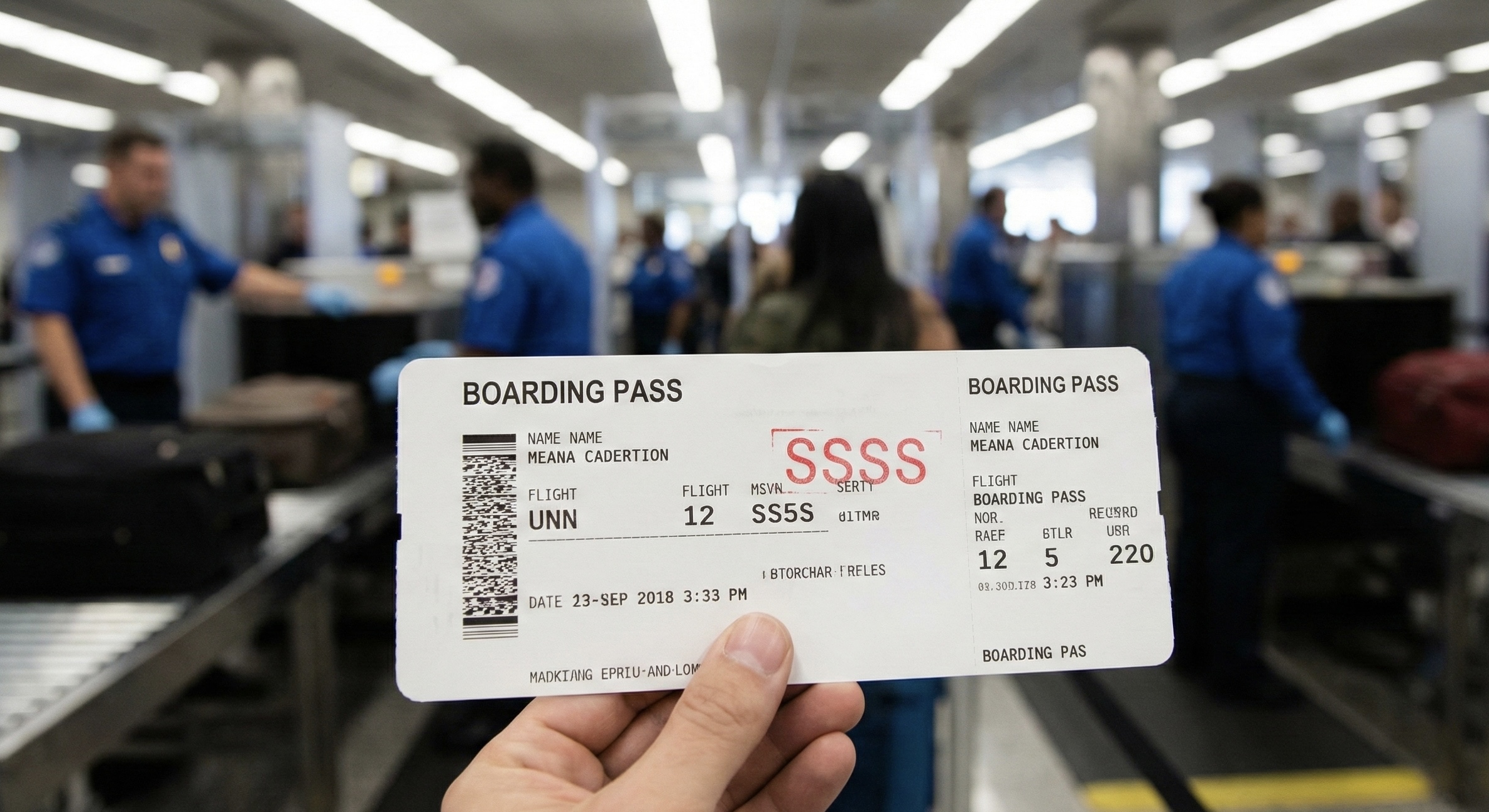
If you’ve ever looked at your airline boarding pass and seen the strange code “SSSS”, it can be surprising — but it doesn’t mean something is wrong with you or your ticket. This four-letter code stands for Secondary Security Screening Selection and signals that you’ve been chosen for additional security checks before boarding your flight.
📌 What “SSSS” Means
“SSSS” means you’ll undergo extra security screening by airport security authorities like the U.S. Transportation Security Administration (TSA) on flights involving the United States — whether departing, arriving, or even connecting through U.S. airports.
Passengers selected will go through more comprehensive checks than usual. This can include:
- Additional pat-downs
- Explosive residue swabbing of hands or items
- Thorough inspection of carry-on luggage
- Extra questions from security officers
Even if you’re enrolled in expedited screening programs like TSA PreCheck or Global Entry, you can still receive an SSSS designation for that flight — and it will override PreCheck privileges for that journey.
✈️ Why You Might Get “SSSS”
The exact criteria TSA uses aren’t publicly disclosed, but several factors are commonly associated with getting selected for secondary screening:
- Random selection — not all SSSS codes are linked to specific security concerns.
- Name matching with government watchlists or similar names.
- Unusual travel patterns, such as last-minute bookings, one-way international tickets, or unusual itineraries.
- Travel to or from destinations considered higher-risk by security authorities.
It’s important to understand SSSS isn’t an accusation or a sign you’re in trouble with authorities — it’s simply an extra layer of security that’s become a standard part of screening in many airports.
⏱️ How It Affects Your Travel
If your boarding pass shows “SSSS”, expect:
- Extra time at the security checkpoint.
- Possible delays if you arrived close to your departure time.
- Thorough screening of both yourself and your carry-ons.
Although the screening takes longer than usual, it generally does not prevent you from boarding as long as you allow enough time and cooperate with security procedures.