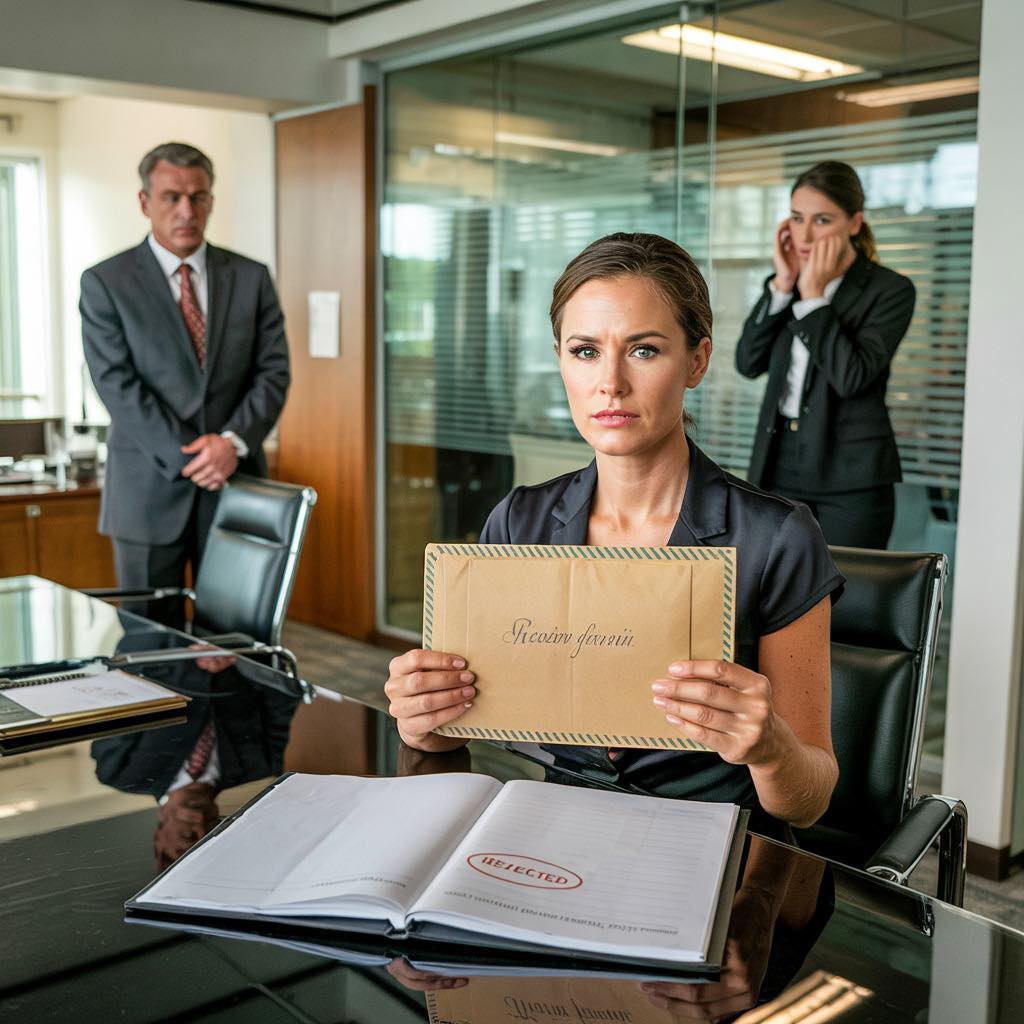
My name is Brittany Lawson, and until three weeks ago, I thought the most exciting part of my life was convincing my landlord to fix the leak under my kitchen sink. I’m thirty-three years old, working as an administrative assistant at a regional logistics company in Cleveland that nobody’s ever heard of. I live in a small apartment with thin walls, drive a ten-year-old Honda Civic with a dent I’ve been meaning to fix, and eat meal-prepped lunches at my desk while my coworkers gossip about things I’m not included in.
I live what most people would call a boring life. I call it stable. Predictable. Safe.
But there’s one thing about me that’s always caused problems in my family: I read everything. Contracts, receipts, fine print, terms and conditions. The paragraphs of tiny text that everyone else scrolls past without thinking. I ask questions when numbers don’t add up. I keep records. I don’t sign anything without understanding exactly what I’m agreeing to.
At work, my coworkers call me “the detail queen” and mean it as a compliment. They bring me invoices with discrepancies, contracts they don’t understand, spreadsheets that won’t balance. I catch the errors they miss, notice when dates don’t match, spot the missing signatures that could cost the company thousands.
My family calls me paranoid. Suspicious. Difficult.
What I didn’t know three weeks ago, standing in an insurance office with my hands shaking and my world turning upside down, was that this annoying, paranoid, difficult habit was exactly why my grandmother chose me. Why she left me everything. Why she spent the last year of her life building a fortress around a secret worth $1.8 million—a secret my own sister had been trying to steal for three years.
In my family, there have always been two daughters: the golden one and the other one. I’ve always been the other one. Growing up, my sister Ashley was the performer—school plays, dance recitals, student council president, homecoming court. She learned early that attention was currency, and she collected it like other kids collected Pokemon cards. Every room she walked into became her stage.
I was the kid who caused no trouble, created no drama. I did my homework, kept my head down, tried not to take up too much space. Teachers forgot my name by the end of the semester. My mother forgot my birthday twice—not forgot exactly, but remembered Ashley’s first and ran out of time for mine.
There’s a specific memory I carry with me even now. My sixteenth birthday. I came downstairs to find no cake, no decorations, no card on the table. My mother had taken Ashley shopping for a dress for some school event and lost track of time. She apologized later, said she got confused with the dates.
Three months later, Ashley turned fourteen and there was a catered party in our backyard with fifty guests, a custom dress, and a professional photographer. My mother never confused Ashley’s dates.
I learned something important that year: some people are seen and some people are invisible. And I learned which one I was.
I wasn’t angry about it anymore—not really. I’d made peace with being the background daughter, the one who showed up and did the right thing and never asked for anything because asking meant being disappointed. I’d built a life that didn’t depend on their approval.
Or so I thought.
The thing about being invisible is that you learn to watch. You see things that people who are being watched never notice. You catch the glances, the whispers, the tiny betrayals that happen in plain sight because no one thinks you’re paying attention.
I saw how Ashley looked at our grandmother when she thought no one was watching—calculating, measuring, like she was trying to figure out what she could get. And I saw how our grandmother looked back, with sharp eyes that missed nothing, waiting.
My grandmother was Margaret Lawson. She was eighty-two years old when she died, and she was the only person in my family who ever made me feel like I existed. She was a widow—had been for decades. My grandfather Franklin passed before I was born. She lived alone in a small Cape Cod house in Lakewood with a garden she maintained herself until her hip gave out last year.
Margaret was a retired bookkeeper who’d worked for a manufacturing company for thirty-five years, tracking numbers, balancing ledgers, finding discrepancies others missed. She used to say she could smell a math error from across the room.
Everyone assumed she had nothing—just an old woman living on Social Security and whatever savings she’d scraped together. She dressed simply, drove the same car for fifteen years, clipped coupons from the Sunday paper. She never asked anyone for money, never complained about being broke. She paid her bills on time, every time.
Looking back, I should have wondered how.
I visited her once a month, sometimes more. Not because anyone asked me to, but because I wanted to. We’d sit in her small kitchen with cups of tea between us, and she’d ask me about my life. Not my job or my plans or whether I was seeing anyone—my life. How I was feeling, what I was thinking, what made me happy.
Over the past year, she’d started saying strange things. Small comments I didn’t know how to interpret. “You’re the careful one, Brittany. That’s rare.” Or, “Most people believe what they want to believe. You believe what you can prove.”
Then two months before she died, she said something I couldn’t forget. I was visiting her at the house, sitting in her kitchen like always, when she reached across the table and took my hand. Her grip was surprisingly strong. Her eyes locked onto mine.
“When I’m gone, they’ll tell you I left nothing. Don’t believe them.”
I asked what she meant. She just smiled that knowing smile that always made me feel like she could see right through me. “Promise me you’ll come when they call you. And promise me you won’t believe everything they tell you.”
I promised. I didn’t understand why, but I promised.
The call came on a Tuesday evening. I was making dinner—nothing special, just pasta with jarred sauce—when my phone buzzed. My mother’s number. I almost didn’t answer. Calls from Karen were rarely good news.
Her voice was flat, business-like. “Your grandmother passed away this morning. The funeral is Thursday at two, Greenwood Chapel. Don’t be late.” Click. The call ended.
No “I’m sorry.” No “Are you okay?” No “I know you loved her.” Just logistics. Don’t be late.
I stood in my kitchen with the phone still in my hand and the pasta water boiling over on the stove. I didn’t notice until the hissing sound broke through the fog in my head. My grandmother was gone. The only person in my family who made me feel seen. She was gone, and I was alone.
That night I couldn’t sleep. Around eleven, my phone buzzed. A text from Ashley: Mom says you might have some of Grandma’s old papers. If you find anything, let me know. I’m handling the estate stuff.
Before I could respond, another text came through: Actually, don’t worry about the papers. I’m sure there’s nothing important. Grandma didn’t really have anything anyway.
The quick correction. The reassurance that came too fast. The sudden need to make sure I wasn’t looking for anything. I knew my sister. She didn’t send midnight texts unless something was bothering her.
I should have known then. But I didn’t know yet what was hidden, what my grandmother had left behind, or that my sister had been trying to steal it for three years.
Greenwood Chapel was a funeral home with beige siding and a parking lot that could hold maybe fifty cars. I arrived fifteen minutes early because my mother had made it very clear not to be late. The service was perfunctory—a pastor who’d never met my grandmother reading generic platitudes, my mother thanking everyone for coming and mentioning Margaret’s “quiet dedication and modest expectations.”
Ashley sat in the front row, visible to everyone, crying at all the right moments. She was the image of a supportive, grieving granddaughter without ever saying a word. No one asked me to speak. No one looked at me for a reaction. I sat in the back row and didn’t exist.
The reception was held in a fellowship hall with mediocre catering and coffee that tasted like it had been sitting in the pot since morning. I was about to leave when I noticed something across the room: Ashley and my mother huddled together near the coffee station, heads close, voices low.
I moved closer, staying behind a floral arrangement where they couldn’t see me.
“Did you check if she left anything else?” Ashley’s voice was urgent. “Any other documents?”
“I went through the house yesterday,” Karen said calmly. “There’s nothing we missed.”
“What about the lawyer? Did he say—”
“He said everything is handled. The will is simple. House goes to me as next of kin. Everything else is negligible.”
A pause. “And Brittany?”
Karen’s voice turned dismissive. “What about her? Margaret didn’t have anything to leave anyone.”
“Good,” Ashley said quietly. “Let’s keep it that way.”
I stood behind the flowers with my heart beating faster. They weren’t grieving. They were securing something, protecting something, and they didn’t want me anywhere near it.
I was still processing when an older man approached me. Late sixties, silver hair, expensive but not flashy suit. “Miss Lawson? Brittany Lawson?”
I nodded. He stepped closer, positioning himself so his back was to the room. “I’m Harold Brennan. I was your grandmother’s attorney for the past twelve years.”
My grandmother had an attorney? He glanced over his shoulder, then reached into his jacket and pulled out an envelope—old, yellowed, edges worn soft with age.
“Your grandmother gave me very specific instructions. I was to wait until the funeral, find you personally, and give you this.” He pressed it into my hands. “She was very clear that it should go only to you. No one else.”
He looked directly into my eyes. “She said you would know what to do with it. And she told me to remind you of something: papers don’t lie. People do.”
Before I could ask questions, he straightened up. “Your grandmother trusted you, Miss Lawson. Don’t let her down.” Then he turned and walked away, disappearing into the crowd.
I stood alone holding the envelope, my mind racing. I started to open it when a hand shot out and snatched it from my grip.
Ashley. She’d crossed the room without me noticing, moving with predatory focus. Her eyes scanned the envelope, evaluating it. “What is this?”
She pulled out the contents before I could answer. Old papers, yellowed with age. She flipped through them quickly, and something that looked like relief crossed her face. “An old insurance policy.” She laughed, but it wasn’t real. “Grandma kept so much junk. She probably forgot she even had this.”
She looked at me with something that was supposed to be pity. “These things expire, you know. It’s worthless.”
“Harold Brennan gave it to me. He said Grandma wanted me to have it specifically.”
Ashley’s eyes flickered at the mention of Harold’s name, then she recovered. “Harold who? Some random lawyer? Grandma didn’t have a lawyer. She was barely getting by on Social Security. There’s no money here, Brittany. Trust me.”
She turned and walked to the nearest trash can. Without hesitation, she dropped the envelope and its contents inside. “Don’t waste your time on expired papers. She kept them for sentimental reasons. Old people do that.”
My mother appeared beside her. “What was that about?”
Ashley shrugged. “Nothing. Just some old papers Brittany found. I threw them out.”
Karen nodded approvingly, then turned to me with tired impatience. “Ashley’s right. Don’t make a scene over nothing. Your grandmother didn’t have anything valuable.”
They walked away together, leaving me standing alone by the trash can. I looked down at the crumpled envelope sitting on top of paper plates and used napkins. The insurance policy my grandmother had hidden, the document she’d given to a lawyer with specific instructions to give only to me.
Ashley had thrown it away like garbage. But people don’t react that fast to things that don’t matter. Whatever was in that trash can, my sister didn’t want me to have it. And that made it the most valuable thing in the room.
I couldn’t sleep. I lay in bed replaying the funeral. Ashley’s hand shooting out to grab the envelope. The sound of paper hitting the trash. My mother’s dismissive voice. But it wasn’t nothing.
I saw Ashley’s face when she looked at that policy. I knew what her dismissal looked like—I’d been on the receiving end my entire life. This was different. This was elimination.
She didn’t throw it away because it was worthless. She threw it away because she needed it to disappear. And I couldn’t stop thinking about Harold Brennan. The way he found me specifically. The careful, deliberate way he handed me that envelope. Papers don’t lie. People do.
My grandmother’s words, coming back through a stranger’s voice.
At 3:47 in the morning, I got out of bed, got dressed in the dark, and drove to Greenwood Chapel. The parking lot was empty. I walked to the service entrance where a large dumpster sat against the wall. I stood there for a moment, thinking about what I was about to do. Here I was, thirty-three years old, college degree, steady job, about to climb into a dumpster at four-thirty in the morning.
My grandmother would have been proud. Or horrified. Possibly both.
I hoisted myself up and dropped inside. The smell hit me immediately—stale food, coffee grounds, wilted flowers. The bags from the reception were right on top. I tore through them systematically. First bag, nothing. Second bag, nothing. Third bag—there. The yellow envelope, crumpled but intact.
I pulled it out and held it against my chest like something precious. For a moment I just stood there in that dumpster, surrounded by garbage, holding my grandmother’s last gift.
By the time I got home, the sun was up. I spread the policy out on my kitchen table and finally looked at it properly. Midwest Mutual Life Insurance Company. Policy number 77449-ML-1989. Original issue date: thirty-five years ago. Policyholder: Margaret Eleanor Lawson.
This policy was older than me.
I flipped through the pages carefully. Premium payment records showing continuous payments month after month, year after year. My grandmother had paid into this policy for thirty-five years. Never missed a payment.
I turned to the most recent beneficiary designation, dated fourteen months ago. Sole beneficiary: Brittany Anne Lawson.
I stared at my own name. Not Ashley. Not Karen. Not split between us. Just me.
But something was wrong. Some pages looked different—newer paper mixed with old. One beneficiary form had a signature that didn’t look right. My grandmother’s handwriting was distinctive: small, precise, slightly slanted to the left. This signature was similar but not quite right. Too large, wrong angle.
I kept flipping. Found another form dated two years ago listing Ashley Marie Lawson as beneficiary, but it was marked in red ink: REJECTED. Signature verification failed.
Someone had tried to change the beneficiary to Ashley, and the insurance company had rejected it.
My phone buzzed. Text from Ashley, 6:17 in the morning: Mom said you were asking about Grandma’s papers at the funeral. I told you there’s nothing there. Just let it go.
Another text one minute later: I’m just looking out for you, Britt. Don’t waste your time on Grandma’s old junk. Trust me, okay?
Six in the morning. Ashley never woke before nine. She was already awake, already thinking about this, already worried. I didn’t respond. I gathered the policy pages carefully, searched for Midwest Mutual Life Insurance online, and found a branch office in Cleveland. Hours: Monday through Friday, 8:30 to 5:00.
Today was Friday. If I left now, I could be there when they opened.
The Midwest Mutual branch office was in a commercial district on the east side of the city. Modern building, glass and steel, corporate landscaping. I parked at 8:23, seven minutes before they opened, and sat watching employees trickle in with coffee cups and badges.
I told myself not to expect anything. Even if the policy was valid, it was probably worth a few thousand. Maybe enough to cover funeral costs. I wasn’t doing this for money. I was doing this for truth.
At 8:30, I walked inside.
The lobby was corporate clean—marble floors, potted plants, soft instrumental music from hidden speakers. The receptionist, Jennifer according to her nameplate, greeted me with a professional smile.
“Good morning. How can I help you?”
“I’d like to inquire about a life insurance policy. My grandmother passed away recently, and I’m listed as the beneficiary.”
I pulled out the envelope. Jennifer took it, examined the yellowed pages with raised eyebrows. “This is quite an old policy. Let me pull it up in our system.”
She turned to her computer and typed in the policy number. I watched her face. At first, nothing—just routine keystrokes. Then her fingers stopped moving. Her smile faded. She leaned closer to the screen, scrolled down, scrolled back up.
“That’s… strange,” she murmured.
“Is something wrong?”
She looked up, expression carefully neutral. “Could you excuse me for just one moment? I need to speak with someone.”
She stood quickly and walked toward a back hallway, disappearing through a door marked EMPLOYEES ONLY. I stood at the reception desk alone, heart beating faster.
Five minutes passed. Then ten. Another receptionist helped other customers but avoided eye contact with me. Finally, a door opened and a woman emerged, walking toward me with purpose. Mid-forties, tailored blazer, reading glasses pushed up on her head. Her badge read: Claire Donovan, Senior Claims Specialist.
“Miss Lawson?” She extended her hand. “I’m Claire Donovan. I handle complex claims for our branch. Would you mind coming with me? I’d like to discuss your grandmother’s policy in private.”
“Is there a problem?”
She paused just a fraction too long. “There are some details we need to review.”
I followed her past cubicles where people pretended not to stare. She led me to a small conference room with glass walls, blinds already drawn. “Please have a seat. Can I get you water? Coffee?”
“I’d like to know what’s going on.”
Claire settled into her chair and folded her hands on the table. “Miss Lawson, I need to verify some information first. This is standard procedure for claims of this nature.”
“What nature?”
She didn’t answer directly. “May I see your driver’s license?”
I handed it over. She compared it to something in her folder, checking details I couldn’t see. She verified my name, date of birth, Social Security number, my relationship to Margaret.
Then she examined the original policy, holding certain pages up to the light, comparing signatures. She took photos with her phone.
“This appears to be the original policy document. It matches what we have on file.”
“Then everything is in order. The policy is valid.”
Claire removed her glasses and looked at me with an expression that was hard to read. “Miss Lawson, this policy is very much valid. But before I tell you more, I need to make a phone call.”
She stepped into the hallway. Through the glass I could see her talking on her cell, expression serious, gesturing with one hand. The call lasted several minutes.
When she returned, she closed the door firmly. “Miss Lawson, I’ve just spoken with our legal department. They’re sending someone over, but I want to explain a few things first.”
“Legal department? Why do you need lawyers?”
“Because this policy is complicated.” She opened a different folder and turned it so I could see. A printed statement with numbers and dates and columns. “Your grandmother purchased this whole life insurance policy thirty-five years ago. She paid premiums consistently every month until her death.”
Claire pointed to a line near the bottom. “Whole life policies accumulate cash value over time. The longer they’re held, the more they’re worth. Your grandmother held this policy for thirty-five years. She never borrowed against it, never withdrew from it. Just kept paying, month after month, for three and a half decades.”
My eyes found the number on the page. My brain didn’t process it at first. It couldn’t be right.
“The current claim value of this policy is approximately $1.8 million.”
Silence. I couldn’t breathe, couldn’t think.
“I’m sorry, did you say—”
“One point eight million dollars. Plus potential dividends and interest pending final calculation.”
“That’s not possible. My grandmother lived in a small house. She clipped coupons—”
“Your grandmother was a bookkeeper for thirty-five years. She understood compound interest better than most financial advisors. She knew exactly what she was doing.”
I stared at the number. My grandmother, who everyone thought had nothing, had quietly built a fortune. And she left it all to me.
Before I could process this, Claire’s expression shifted. “Miss Lawson, there’s something else you need to know. This policy should be straightforward—policyholder deceased, beneficiary verified, claim approved. But it’s not straightforward because someone has been trying to interfere with it.”
She pulled out another folder, thicker. “The company has received multiple requests to modify the beneficiary designation on this policy. Seven requests in total. All of them were rejected.”
“Why were they rejected?”
“Your grandmother placed a legal lock on this policy fourteen months ago. After that, no changes could be made without her physical presence and notarized consent.” Claire’s voice dropped. “Someone kept trying anyway, submitting forms with signatures that didn’t match our records. We flagged it as potential fraud.”
She turned the folder toward me. “These are the rejected modification requests. I think you should see the name on them.”
I looked at the top form. The signature line at the bottom. The name written there in handwriting I would recognize anywhere: Ashley Marie Lawson.
My sister’s signature. My sister’s handwriting.
I flipped through the forms. Seven attempts over three years. Each one trying to change the beneficiary from me to Ashley. Each one rejected for signature verification failure.
One form had a second signature as witness: Karen Lawson. My mother had witnessed at least one of these attempts.
“Miss Lawson, I have to ask.” Claire’s voice was gentle but direct. “Do you know Ashley Lawson?”
“She’s my sister.”
Claire nodded slowly, as if this confirmed something. “Then you should know that what she attempted constitutes insurance fraud. It’s a felony. Multiple felonies actually. Our legal department will be filing a report with the authorities.”
There was a knock at the door. Two people entered: a tall man in a gray suit identified as Thomas Richardson, branch director, and beside him a woman in a navy suit—company attorney.
Richardson shook my hand. “Miss Lawson, I oversee this branch. I understand Claire has explained the situation regarding your grandmother’s policy. I want to assure you that Midwest Mutual takes fraud very seriously. We’ll be cooperating fully with law enforcement.”
He paused, gathering himself. “Your grandmother was a remarkable woman. She anticipated this.”
“What do you mean?”
“Fourteen months ago, she came to this office personally. She sat in this very room. She told us that when she died, someone would try to steal her policy.” Richardson leaned forward. “She gave us specific instructions. She named you—only you—as the person authorized to receive information or file a claim. No one else, under any circumstances.”
His eyes met mine. “She said you were the only one she trusted.”
I sat in that conference room surrounded by lawyers and insurance executives, and felt something shift inside me. My grandmother had prepared for this. She’d spent the last year of her life building a fortress around this policy, and she’d made sure I would be the one to defend it.
I looked down at the forms with Ashley’s signature. Seven attempts, three years, systematic fraud. My sister had thrown this policy in the trash because she thought she’d already won. She thought the forgery attempts had succeeded. She thought our grandmother’s money was already hers.
She had no idea the real fight was just beginning.
The next three weeks were a blur of legal proceedings, police interviews, and phone calls I’d been avoiding my entire life. The first came from my mother two days after my visit to the insurance office, her voice tight with barely controlled fury.
“What did you do, Brittany? The police came to Ashley’s house. They’re talking about fraud charges. What lies did you tell them?”
“I didn’t tell them anything, Mom. The insurance company did. Ashley tried to forge Grandma’s signature seven times to steal my inheritance. That’s a felony.”
Silence. Then: “Your inheritance? Margaret didn’t have anything. This is ridiculous. You’re making this up to hurt your sister.”
“The policy is worth $1.8 million. Grandma left it to me. Ashley tried to steal it.”
I heard my mother’s sharp intake of breath. When she spoke again, her voice was different—calculating, strategic. “If there’s that much money involved, surely we can work this out as a family. Ashley made a mistake, but we don’t need to involve the police. We can split it—”
“No, Mom. We can’t. Fraud doesn’t get resolved with family meetings. And Grandma left it to me. Just me. For a reason.”
“You ungrateful—after everything this family has done for you—”
“What has this family done for me? You forgot my sixteenth birthday. You put Ashley in the front row at Grandma’s funeral and told me to sit in the back. You watched her throw away my inheritance and approved. So tell me, what exactly has this family done for me besides make me invisible?”
I hung up. My hands were shaking, but something inside me felt lighter than it had in years.
The criminal charges against Ashley came swift and severe. Seven counts of attempted fraud, two counts of forgery, one count of conspiracy. The prosecutor’s office was particularly interested in my mother’s involvement as a witness on several forms. Karen hired a lawyer immediately, claimed she’d signed documents without reading them, that Ashley had told her they were estate planning paperwork.
The prosecutor didn’t buy it.
Ashley’s lawyer tried to negotiate. Claimed she was desperate, that she thought the money should be split evenly, that it was a family dispute, not a crime. But the insurance company’s documentation was ironclad: seven systematic attempts to forge signatures, backdated beneficiary forms, false statements to company representatives.
The judge didn’t see a family dispute. The judge saw a felony.
Ashley pleaded guilty to avoid trial. The sentence came down three months after I’d climbed into that dumpster: three years in prison, five years probation, full restitution to cover the insurance company’s legal costs and investigative expenses. My mother, as an accessory, received two years probation and a substantial fine.
I didn’t attend the sentencing hearing. I’d said everything I needed to say in my victim impact statement, typed on my laptop in my small apartment, every word carefully chosen: “My sister didn’t just try to steal money. She tried to steal the only thing my grandmother had left me—the proof that I mattered to someone. That theft was worth more than $1.8 million to her. It was worth more than our relationship, more than honesty, more than family. I hope she understands now what that cost her.”
The insurance company processed my claim within six weeks. Professional, efficient, apologetic about the complications. The money arrived in my bank account on a Tuesday morning: $1,847,293.17.
I stared at the number on my phone screen for a long time. Then I called my landlord and gave notice. I called my boss and resigned. I called a realtor and started looking at houses.
Not mansions. Not luxury. Just… space. Room to breathe. A place that was mine.
Six months after my grandmother’s funeral, I stood in the kitchen of a small Cape Cod house in Lakewood—two blocks from where my grandmother had lived. It had white siding, blue shutters, and a garden that needed work. The realtor had apologized for the overgrown flower beds, the dandelions pushing through.
I told her it was perfect.
I spent my first week there pulling weeds, planting new flowers, sitting on the porch with tea in my grandmother’s old cups that I’d retrieved from the estate sale. I’d bought back several of her things—the chess set, the mystery novels, the recipe box with her handwritten lemon cookie recipe.
I didn’t quit working entirely. I started freelancing as a financial consultant, helping people understand their insurance policies, reviewing estate planning documents, catching the details others missed. My attention to detail—the thing my family had called paranoid and difficult—became my greatest asset.
People paid me well for it. I turned down more clients than I accepted. I only worked with people I trusted, people who reminded me of my grandmother: careful, thorough, willing to plan ahead.
One year after the funeral, I received a letter. Prison stationery, Ashley’s handwriting on the envelope. I almost threw it away without opening it, but curiosity won.
Brittany,
I know you probably don’t want to hear from me. I don’t blame you. What I did was wrong. I’ve had a lot of time to think about it here, and I’m starting to understand something.
I spent my whole life performing. Being the golden child, the favorite, the one everyone watched. And somewhere along the way, I started believing that being seen meant I deserved more. That attention was the same as value.
But Grandma didn’t care about performances. She cared about truth. She left everything to you because you were the one who showed up without an audience. You were the one who saw her as a person, not as an asset.
I’m not asking for forgiveness. I don’t deserve it. I just wanted you to know that I finally understand why she chose you. And she was right to.
— Ashley
I read the letter twice, then put it in a drawer. Maybe someday I’d respond. Maybe not. The truth was, I didn’t need Ashley’s understanding to validate my grandmother’s choice. I’d already spent a year learning to take up space, to be seen, to matter.
On the anniversary of my grandmother’s death, I did something I’d been planning for months. I established the Margaret Lawson Financial Literacy Foundation, funded with half a million dollars from the inheritance. The foundation offered free financial planning workshops, helped people understand their insurance policies, taught basic bookkeeping and money management to people who’d never learned.
The first workshop had twelve attendees. Mostly older women, mostly living on fixed incomes, mostly afraid they were one emergency away from disaster. I taught them what my grandmother had taught me: papers don’t lie, people do. Read everything. Keep records. Ask questions.
One woman, probably seventy, raised her hand at the end. “My daughter keeps telling me to sign over my house to her for tax purposes. Should I?”
I spent twenty minutes walking her through the implications, the risks, the alternatives. When she left, she hugged me tight and whispered, “Thank you for treating me like I’m smart enough to understand.”
I understood exactly what she meant.
The house in Lakewood became mine in ways I’d never experienced before. Not because I owned it, but because I’d chosen it. I painted the walls colors I liked. I planted a garden with vegetables and herbs my grandmother would have approved of. I adopted a cat from the shelter and named her Margaret.
I dated occasionally, carefully, with none of the desperation I’d felt in my twenties when I thought finding someone might make me matter. Now I knew I already mattered. Partnership was optional.
Some Sundays, I’d sit in my grandmother’s old chair on the porch with tea and one of her mystery novels, and I’d talk to her. Out loud, like she was still there.
“You knew, didn’t you? You knew exactly what they’d do. You knew Ashley would try to steal it, that Mom would help her, that they’d tell me it was worthless. You knew, and you prepared for all of it.”
The wind would move through the trees, and I’d imagine it was her answer: Of course I knew, sweetheart. I’ve been watching this family for eighty-two years. I know who sees and who performs.
“Why me, though? Why not split it? Why make it all or nothing?”
Another gust of wind, and I’d hear her voice in my memory: Because you’re the careful one, Brittany. You read everything. You ask questions. You don’t believe what’s convenient—you believe what you can prove. That’s rare. That’s valuable. That’s worth everything I had to give.
Two years after the funeral, I ran into my mother at a grocery store. Literally ran into her—my cart bumped hers as I turned a corner. We both stopped, frozen, recognizing each other.
She looked older. Thinner. The expensive highlights were gone, her hair showing natural gray. Her clothes were still nice but not designer. The probation and legal fees had taken their toll.
“Brittany,” she said, and her voice was different. Smaller. Uncertain.
“Mom.”
Silence stretched between us. Other shoppers moved around us, oblivious to the years of pain and betrayal standing in the frozen foods aisle.
“How are you?” she asked finally.
“I’m good. Really good.”
She nodded, seeing something in my face that I don’t think she’d ever seen before. Confidence. Peace. The absence of the need for her approval.
“I heard about your foundation. The financial literacy thing.”
“Word gets around.”
“That’s… that’s good. What you’re doing. Your grandmother would be proud.”
I looked at her—really looked at her—and saw something I’d never expected to see. Regret. Real regret, not performance regret.
“Yes,” I said quietly. “She would be.”
Karen’s eyes filled with tears. “I was a terrible mother to you. I see that now. I don’t know if I can ever—if you’d ever—”
I held up my hand gently. “Mom, I forgive you. Not because you’ve earned it, and not because what you did was okay. But because carrying that anger around was exhausting, and I’m done being exhausted.”
“But forgiveness doesn’t mean forgetting. It doesn’t mean going back to how things were. It means I’ve let go of expecting you to be someone you’re not.”
She nodded, tears spilling over. “That’s fair. That’s more than fair.”
We stood there for another moment, and then I said, “I need to finish my shopping. Take care of yourself, Mom.”
I moved past her, my cart rolling smoothly down the aisle, and I didn’t look back. Not out of cruelty, but because I’d finally learned what my grandmother had been trying to teach me all along: some people will only see you when you’re useful to them. And that’s not about you—it’s about them.
The people who matter will see you in the dark.
Three years after the funeral, on what would have been my grandmother’s eighty-fifth birthday, I organized a memorial service at the foundation’s new community center. Not a funeral—a celebration. I invited everyone whose lives she’d touched, everyone who remembered her as more than just a quiet old woman with nothing to give.
Forty-three people came. Former coworkers from the manufacturing company who remembered how she’d caught accounting errors that would have cost jobs. Neighbors who remembered how she’d quietly paid their light bill when they were struggling. Students from the adult education center where she’d volunteered to teach basic bookkeeping.
I stood at the front of the room and told them the truth: “My grandmother left me $1.8 million. But that’s not what she really left me. She left me proof that being careful matters. That paying attention matters. That showing up without an audience matters. She left me the knowledge that I was seen and valued, not for what I could do for someone else, but for who I actually was.”
“And she left me a lesson I want to share with all of you: papers don’t lie, people do. Read everything. Ask questions. Keep records. Don’t believe something is worthless just because someone tells you it is—especially if that person wants you to throw it away.”
I held up the crumpled yellow envelope, the one I’d retrieved from a dumpster at four-thirty in the morning three years ago. “This looked like garbage. My own sister threw it away and told me it was worthless. But it wasn’t. It was the most valuable thing anyone has ever given me.”
“Not because of the money, but because of what it proved: that my grandmother saw me when no one else did. That she trusted me when no one else would. That she knew I would read what others ignored, question what others accepted, and fight for what was true even when everyone told me to let it go.”
The room was silent. Then someone started clapping. Then everyone was standing, applauding not for me but for the woman who’d taught me that invisible doesn’t mean worthless.
That night, I sat in my grandmother’s chair on the porch with Margaret the cat purring in my lap, and I thought about the girl I’d been three years ago. The one who lived small, who made herself invisible, who accepted crumbs and called it enough.
That girl was gone. In her place was a woman who took up space. Who asked questions. Who read the fine print. Who climbed into dumpsters at four in the morning when something mattered. Who built foundations and taught workshops and looked her mother in the eye and said “I forgive you but we’re done now.”
My phone buzzed. A text from one of my workshop students: Thank you for teaching me to read my insurance policy. I found an error that would have cost me $30,000. You saved my life.
I smiled and typed back: You saved your own life. I just reminded you to look.
Because that’s what my grandmother had done for me. She hadn’t saved me. She’d given me the tools to save myself, hidden in a yellow envelope that looked like garbage but turned out to be worth more than money could measure.
I looked up at the stars appearing over Lakewood, Ohio, and whispered into the evening air: “Thank you, Grandma. For seeing me. For trusting me. For teaching me that the most valuable things are often the ones other people throw away.”
The wind moved through the trees, carrying the scent of the garden I’d planted, the flowers that were finally starting to bloom. And somewhere in that wind, I swear I heard her voice one last time:
You’re welcome, sweetheart. Now stop talking to ghosts and go live your beautiful life.
So I did.