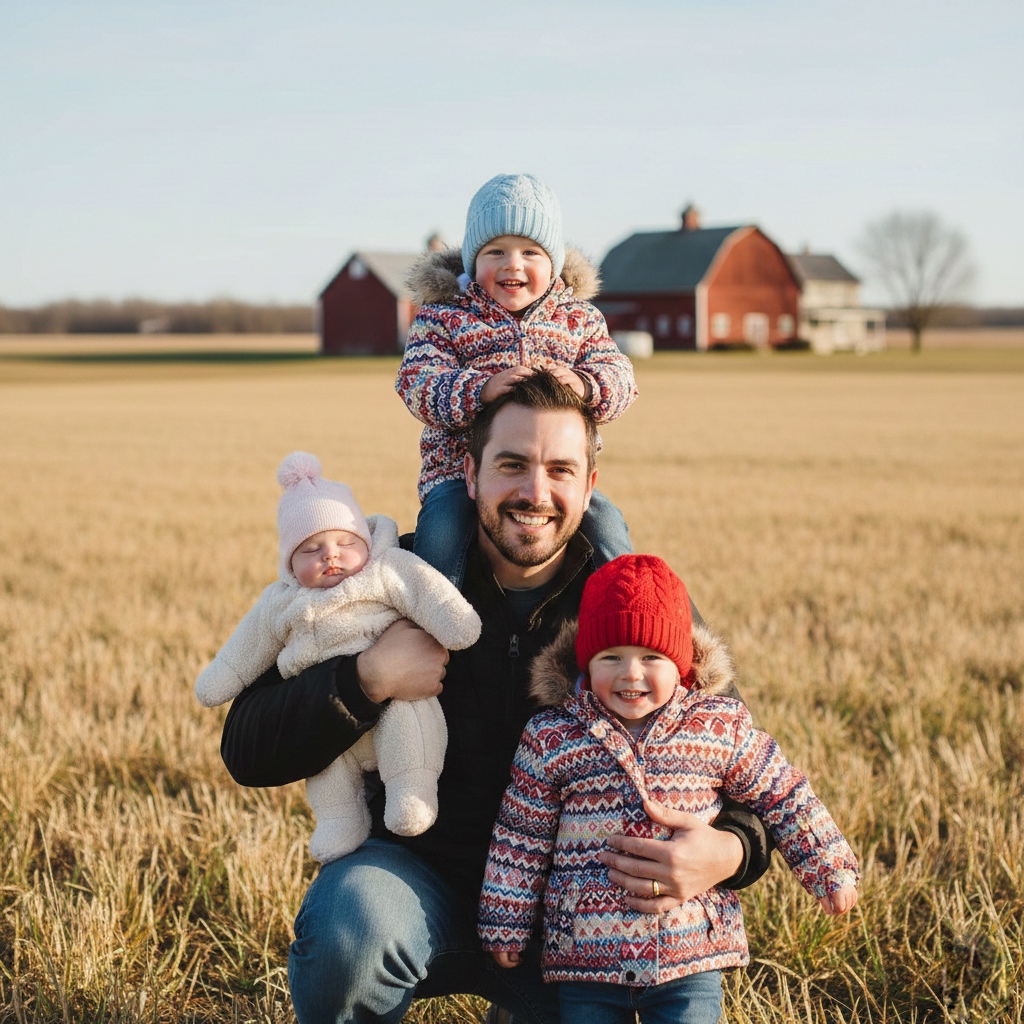
The Week She Tried to Bury Us With Him
The week we buried my grandfather was the same week my aunt tried to bury us.
Looking back, I sometimes wonder if Grandpa knew exactly how it would unfold. If he could see beyond the machines in his hospice room, beyond the tremor in his hands, beyond the slowing of his breath.
Maybe he knew she would come back not to mourn him — but to measure the land.
Maybe that’s why he moved first.
But I didn’t know any of that then.
All I knew was that I was about to lose the only man who had ever chosen me.
The Night Everything Changed
I was twelve the night my parents died.
Rain hammered the highway outside town. I remember the police officer’s hat dripping onto our kitchen floor. I remember the way adults spoke in low voices like grief was contagious.
“Collision.”
“Hydroplaned.”
“Instant.”
At the hospital, I sat on a plastic bench under fluorescent lights that buzzed like insects. A social worker with kind eyes kept saying words that didn’t land:
“Placement.”
“Temporary guardianship.”
“Adjustment period.”
I didn’t want placement.
I wanted my dad’s laugh.
I wanted my mom’s hand squeezing mine.
Instead, I heard boots against tile.
“He’s coming home with me.”
That was my grandfather.
He didn’t raise his voice. He didn’t argue. He didn’t negotiate.
He just placed his hand on my shoulder, firm and warm.
And that was that.
The Farm That Saved Me
The farm wasn’t impressive.
The barn paint peeled like sunburned skin.
The fence posts leaned.
The roof leaked every April.
But it was steady.
Grandpa smelled like hay, engine oil, and peppermint gum. He didn’t talk about feelings much. He showed them.
He handed me tools.
He taught me to read clouds before storms.
“Sky’s too still,” he’d say. “Wind’ll turn ugly by night.”
He showed me how to mend broken fences, and somehow, without ever saying it outright, he mended me too.
When nightmares woke me — headlights, rain, twisted metal — he would sit on the edge of my bed.
“You’re safe here, Daniel,” he’d whisper.
“Nothing touches you on this land.”
And I believed him.
Leaving — And Coming Back
I left at eighteen.
Thought I needed more than dirt under my fingernails. Married at twenty. Divorced by twenty-four.
By twenty-five I was back — three kids in the backseat of a rusted pickup, pride cracked wide open.
I expected disappointment.
Instead, Grandpa just counted boots.
“Three extra pairs,” he said, nodding toward the door. “Good. House was getting too quiet.”
He never asked why my wife left.
He never blamed me.
He just made space.
Taking the Weight
Ten years ago, the decline began quietly.
He forgot where he’d left his hat.
Asked twice if the horses had been fed.
One morning I found him standing at the bottom of the stairs, staring upward like they were a mountain range.
“I’ll get the railing fixed,” I said.
But it wasn’t the railing.
It was time.
So I stepped in.
I ran the harvest.
Negotiated seed prices.
Balanced books at midnight after the kids were asleep.
Drove him to doctors in towns an hour away.
When early frost wiped out our best yield in fifteen years, I took out a small loan.
Didn’t tell Grandpa.
Didn’t tell anyone.
The farm wasn’t profitable — not really. It survived. Some years we scraped by. Some years we didn’t.
But it was ours.
The Daughter Who Left
Linda — Grandpa’s only child — had left decades earlier.
She’d called farm life “small-minded.”
Moved to Chicago. Married a commercial real estate broker. Filled her social media with rooftop cocktails and spa weekends.
She called Grandpa on holidays.
And when her credit card bills ballooned.
He always sent money.
“Family helps family,” he’d shrug.
When hospice began, she didn’t visit.
Not once.
The nurse told me gently, “You should let his daughter know it’s close.”
I texted her.
Her response came three hours later:
“Keep me posted.”
Tuesday, 5:12 a.m.
I was holding his hand when it happened.
His breathing had grown shallow, then softer, then—
Still.
The room felt too quiet.
I waited for some sign — a twitch, a correction, something.
Nothing came.
I pressed my forehead to his knuckles.
“Thank you,” I whispered.
Linda arrived that afternoon.
The Inspection
I heard the car first.
Gravel crunching under expensive tires.
A sleek black Mercedes stopped in front of the house like it didn’t belong on dirt roads.
She stepped out in a white blazer and oversized sunglasses.
No hug.
No tears.
She removed her glasses and scanned the house.
“Wow,” she said. “It looks smaller.”
“It’s the same,” I replied.
She walked past me into the house as if she owned it already.
My five-year-old, Noah, sat on the floor with toy tractors.
She stepped around him without acknowledgment.
For three days before the funeral, she inspected everything.
Opened drawers.
Measured wall space with her eyes.
Photographed the north field.
“This wood paneling has to go,” she muttered in the dining room. “No buyer wants this.”
Buyer.
The word lodged in my chest.
In the barn, she wrinkled her nose.
“The smell alone will scare off developers.”
“Developers?” I asked.
She gave me a tight smile.
“There’s lake access on the north edge, Daniel. Do you have any idea what this land is worth now?”
“This is our home.”
“It was my father’s home.”
The Kitchen Ultimatum
The night before the funeral, she cornered me by the sink.
“Let’s not make this messy,” she said casually.
My hands were still wet from washing dishes.
“You have three days.”
“For what?”
“To move.”
The word didn’t compute.
“I’ve already spoken to a development group,” she continued. “They’re eager. Groundbreaking can start next week.”
My stomach turned.
“Linda, my kids live here.”
She tilted her head.
“And legally, I’m his only child.”
The words felt rehearsed.
“Once the will is read, it transfers to me. I’m being generous giving you notice.”
“Generous?” I repeated.
She shrugged.
“It’s business.”
The Funeral
At the funeral, she cried beautifully.
Perfect posture. Perfect tears.
Guests whispered how devoted she seemed.
She squeezed hands and accepted condolences like an actress accepting awards.
I stood beside the casket and felt like I was watching a performance.
Emma gripped my jacket.
“Are we leaving?” she whispered.
“Not today,” I said.
But I didn’t know.
The Envelope
Two days later, at the lawyer’s office, Linda arrived late.
Black dress. Diamond earrings. Composed.
She slid a folded paper across the desk toward me.
“Just expediting things.”
I unfolded it.
Eviction notice.
Dated that morning.
Three days to vacate.
My vision blurred.
Mr. Henderson — Grandpa’s longtime lawyer — didn’t even glance at it.
Instead, he removed a sealed folder from his briefcase.
“Actually,” he said calmly, “we won’t be discussing eviction today.”
Linda smiled confidently.
“I’m his only heir.”
Mr. Henderson adjusted his glasses.
“Three days ago, your father no longer owned the farm.”
Silence.
Linda blinked.
“What?”
“He transferred ownership.”
“To who?” she demanded.
“To a protected family trust.”
Her composure cracked.
“That’s ridiculous.”
Mr. Henderson placed the deed on the desk.
“The transfer was completed legally, with witnesses, while he was of sound mind.”
She leaned forward.
“And who controls this trust?”
He looked at me.
“Your father named his youngest great-grandchild, Noah, as sole trustee and lifetime resident.”
The air left my lungs.
Linda laughed sharply.
“He’s five.”
“Which is why Daniel serves as acting trustee until Noah turns twenty-one.”
Her face drained of color.
“You knew about this.”
“I didn’t,” I said honestly.
Mr. Henderson pressed a button on a small recorder.
Grandpa’s voice filled the room.
“If you’re hearing this, I’m gone.”
Linda froze.
“I know my daughter,” Grandpa continued. “She’ll chase the next dollar. This land doesn’t belong to whoever wants to sell it. It belongs to whoever protects it.”
My throat closed.
“Daniel and those kids kept this farm alive. They earned the right to stay.”
Linda’s hand trembled.
“I am not confused. I am not pressured. This is my decision.”
The recording clicked off.
The Clause
Linda swallowed.
“So I get nothing?”
“Twenty-five thousand dollars,” Mr. Henderson replied.
Her eyes brightened.
“However,” he continued, “the inheritance is conditional.”
Her smile faltered.
“You must assist in operating the farm for five years. Physical labor. Financial collaboration. Cooperative management with Daniel. If the farm becomes profitable and you fulfill those duties, the funds will be released.”
She stared at him.
“You’re joking.”
“And if you contest the trust,” he added, “you forfeit everything.”
The eviction notice crumpled in her fist.
“You think you’ve won,” she hissed at me.
“I never wanted a fight.”
She stormed out.
And that should have been the end.
But it wasn’t.
Because three days later, a black SUV pulled into the driveway.
And Linda stepped out wearing boots.
PART 2 — Dirt Under Designer Nails
Three days after the will reading, I was fixing a fence along the north pasture when I heard it again.
Gravel under expensive tires.
I straightened slowly.
A black SUV — not the Mercedes this time — rolled to a stop in front of the farmhouse. Linda stepped out.
But she wasn’t wearing a blazer.
She was wearing boots.
Brand new. Still stiff. The tag likely thrown away five minutes earlier.
She walked toward me like someone entering a foreign country.
“I’m here about the clause,” she said.
I leaned against the fence post. “You mean the part where you have to work?”
Her jaw tightened. “Twenty-five thousand dollars is twenty-five thousand dollars.”
“You’ve spent that on handbags.”
She ignored that.
“So what exactly counts as ‘assisting operations’?”
I looked at her boots.
“Let’s start with mucking stalls.”
The First Day
Linda lasted seventeen minutes in the barn.
She gagged at the smell.
“You live like this?” she demanded.
“We live from this.”
She tried carrying a bale of hay and nearly toppled over backward. By noon her hands were blistered.
At lunch, she sat at the kitchen table scrolling her phone.
“There are developers offering six figures per acre for lakefront access,” she muttered.
“Not happening.”
“You’re clinging to sentiment. That’s not business.”
I didn’t respond.
Because deep down, she wasn’t wrong about one thing.
The farm was barely surviving.
And she knew it.
The Bank Call
That night, after the kids were asleep, my phone rang.
It was Mr. Talbot — the banker.
“Daniel,” he said carefully, “your loan restructuring request was denied.”
My stomach dropped.
“I just need another six months.”
“You’re already extended.”
I looked out the kitchen window at the dark fields.
“I’ll figure it out.”
Linda overheard part of the call.
The next morning she cornered me.
“You’re in debt?”
“It’s handled.”
“How much?”
I didn’t answer.
Her eyes sharpened.
“So that’s it. You can’t afford to keep this place. Grandpa handed you a sinking ship.”
The words hit harder than they should have.
Because I had thought that too.
The Developer Visit
Two days later, a silver truck pulled into the driveway.
A man in polished shoes stepped out, holding blueprints.
Linda’s doing.
“I didn’t invite him,” I said flatly.
“He’s just assessing,” she replied sweetly.
The man introduced himself as Mark Caldwell from a regional development group.
“We’re prepared to offer two million for the full parcel,” he said casually.
Two million.
For a moment, I saw it.
No more loans.
College funds secured.
New beginnings.
But then I pictured bulldozers tearing through the north field.
Grandpa’s fence lines flattened.
“You’re wasting potential,” Caldwell continued. “This area’s expanding. It’s inevitable.”
“Inevitable doesn’t mean right,” I said.
Linda crossed her arms. “You’re choosing pride over security.”
I met her eyes.
“No. I’m choosing legacy.”
Caldwell left his card.
Linda didn’t speak to me for the rest of the day.
PART 3 — Storm Warnings
It started with the sky.
Grandpa always said you could smell trouble before you saw it.
That afternoon, the air turned heavy and metallic.
Storm season came early.
We rushed to secure tarps and equipment. Even Linda worked without complaint this time — maybe realizing that real money depended on survival.
The wind hit just after dusk.
Hard.
A section of the north fence collapsed. One of the horses panicked.
“Daniel!” Emma screamed from the porch.
I ran into sheets of rain.
Linda followed.
We worked side by side in mud, dragging boards, calming the horse, securing the gate.
Lightning cracked so close it felt like the sky split open.
For the first time, I saw fear in Linda’s eyes — not disgust. Not superiority.
Fear.
“This is insane!” she shouted over the wind.
“This is farming!”
We saved the horse.
But by morning, half an acre of crops was flattened.
I stood in the wreckage feeling hollow.
Linda walked up beside me.
“How bad?” she asked quietly.
“Bad.”
For a long moment, she said nothing.
Then:
“There’s a grant program for sustainable farms expanding into agri-tourism.”
I looked at her.
“I researched last night,” she admitted. “If we diversify revenue, you could stabilize cash flow.”
“You’re helping?”
She hesitated.
“I want the money,” she said defensively.
But it wasn’t only that anymore.
The Second Recording
A week later, Mr. Henderson called.
“There’s something else your grandfather left,” he said.
We met at his office.
Another recording.
Grandpa’s voice, weaker but steady:
“Daniel, if the farm ever struggles, adapt. Don’t freeze it in time. Keep the land — but let it grow with you.”
I swallowed.
“And Linda,” the recording continued, “if you’re listening — prove me wrong.”
Silence filled the room.
Linda wiped at her eye angrily.
“He always thought I was selfish.”
“Maybe he thought you were capable of more,” I said.
She didn’t answer.
PART 4 — What We Chose to Build
The next year was the hardest of my life.
And the most transformative.
We applied for grants.
Converted the old barn loft into a small event space.
Started fall harvest festivals.
Emma ran a farmstand stand every Saturday.
Linda handled marketing — and she was good at it.
Really good.
She negotiated supplier contracts better than I ever had.
She modernized our online presence.
And slowly — unbelievably — the numbers changed.
The farm wasn’t drowning anymore.
It was breathing.
The Five-Year Mark
Five years passed faster than I expected.
Noah turned ten.
The farm posted its first true profit in decades.
On the anniversary of Grandpa’s passing, we sat on the porch together — me, the kids, and Linda.
She looked different now.
Less polished. More grounded.
Mr. Henderson released the funds.
Twenty-five thousand dollars wired to her account.
She looked at her phone screen.
Then she laughed softly.
“You know,” she said, “five years ago I would’ve sold this place in a heartbeat.”
“What changed?” Emma asked.
Linda looked out over the fields.
“I finally worked for something that couldn’t be flipped.”
She stood.
“I’m not leaving, by the way. I negotiated a revenue share clause.”
I stared at her.
“You what?”
She grinned.
“Relax. Fifty-fifty management on events. I’m not the villain anymore.”
I shook my head, laughing.
The Sunset
That evening, after everyone went inside, I walked to the north field.
The same land developers once circled.
The same land Grandpa fought quietly to protect.
The sky burned orange.
I could almost hear his boots behind me.
“You did good,” I whispered into the wind.
But the truth was—
He had.
He saw further than any of us.
He didn’t just protect dirt.
He forced growth.
Forced reconciliation.
Forced legacy to mean something more than ownership.
What the Farm Became
It became:
A place where my kids learned resilience.
A place where Linda found humility.
A place where grief turned into foundation instead of fracture.
A place where money no longer dictated worth.
And every time I see Noah running through the fields — the legal owner who doesn’t yet understand what that means — I remember something Grandpa once told me:
“Land doesn’t make a family.
Family makes the land matter.”
The farm is still standing.
Stronger than ever.
And this time—
No one is coming to take it.