The church smelled of old wood and too many competing perfumes, and by the time we made it back to my mother’s house in Albany, everyone was exhausted in the particular way that funerals exhaust you, which is not the tiredness of the body but something deeper and less recoverable. People I hadn’t seen in years moved through the living room with the careful solemnity of people who had dressed up for someone else’s grief and were now looking for the polite moment to leave. Reheated casseroles sat on the dining room table. Someone had brought a bundt cake. The house smelled like the kind of food people bring when they don’t know what else to do.
I sat in the corner still in uniform. Not to make a statement. I had flown directly from Fort Bragg and hadn’t had time to change, and given that everything else about the day felt slightly surreal, the uniform seemed as appropriate as anything else. My father had served two years before I was born. He had understood what it meant to put something on and carry it.
My younger sister Megan moved through the room with the quiet purposefulness of someone managing an event. She leaned close to relatives, murmured things, laughed softly at the right moments. She had a way of making herself central to any gathering without appearing to try, which was one of her genuine skills, and she had been deploying it since childhood. I watched her and felt the familiar mixture of things I always felt watching Megan: a tired kind of recognition, and something older underneath it that I had never fully named.
Robert Chen arrived around four o’clock with a briefcase and the expression of a man carrying weight he would have preferred not to carry. He had been my father’s attorney and friend for thirty years, and the careful neutrality he wore walking through that door told me everything about what was coming. The room rearranged itself around the dining table with the instinctive gravity of people who understand that money is about to be discussed.
Robert read the will slowly and clearly. My mother, Helen, sat with her hands folded in her lap so tightly her knuckles had gone pale. Megan sat across from me with the composed alertness of someone who already knows the answer to the test question and is waiting for the class to catch up.
To my daughter Megan, Robert read, I leave the Miami apartment and a minority share in Whitmore Construction.
Megan’s smile widened a fraction. The Miami property was a luxury condominium with a view of Biscayne Bay. It was, by any measure, the flashier asset, the one that photographed well and made people understand immediately that they were looking at wealth.
Then Robert turned the page.
To my daughter Hannah, I leave the family cabin and the surrounding two hundred acres in the Adirondacks.
For a moment the room was genuinely quiet. I kept my face still. I had learned that in the army, how to receive information without telegraphing your reaction to it, and I used that skill now, sitting in my father’s dining room with my hands flat on the table and my expression giving away nothing.
Megan, however, was not someone who had ever learned restraint.
She leaned back in her chair and crossed her arms and looked at me with the particular smile she had worn since we were children, the one that communicated that she had won something and wanted to make certain I understood it.
“A cabin,” she said. “Well. That fits you perfectly, you stinking woman.”
She didn’t whisper it. She said it at full volume, with the casual confidence of someone who has never once had to consider whether a room was on her side.
Some people gasped. Others laughed, the uncomfortable reflex kind that people produce when they don’t know how else to respond to cruelty in an unexpected setting. Robert shifted in his chair and kept his eyes on the document in front of him, apparently deciding that professional composure required him to pretend the last ten seconds had not occurred.
I looked at my mother.
She was looking at the table.
That silence, that studied avoidance, cut somewhere deeper than the words had. Megan was Megan. I had understood her for thirty years. But my mother’s deliberate non-response was a choice, a small and cowardly decision made in real time, and I felt it settle into my chest like a stone.
Megan continued, warming to her audience, her voice carrying a light, teasing quality that made the cruelty sound like affection if you weren’t listening carefully. She said I lived out of a duffel bag anyway. She said the cabin was perfect for someone like me. She suggested I would enjoy chopping firewood. She said, with the finality of someone closing a transaction, that no one would even notice if I disappeared up there.
I stood, picked up my jacket, and walked out.
Years in the army teach you the discipline of knowing when to hold ground and when a tactical withdrawal is the smarter move. This was a tactical withdrawal. I said nothing. I walked through the front door and down the porch steps and stood on the sidewalk in the cold Albany air, breathing it in, letting the chill settle the heat I could feel rising behind my ribs.
My mother appeared in the doorway a few minutes later. She pulled her sweater tighter around herself and said, without quite meeting my eyes, that Megan hadn’t meant it. That she was under stress. That maybe I should try to understand.
“She just inherited a condominium worth two million dollars,” I said. “What exactly is stressful about that?”
My mother stepped back inside without answering, and the door closed with a quiet click that sounded, in the stillness of the street, very final.
I drove south without a destination. At a rest stop somewhere between Albany and the base, I sat with the engine idling and stared at the ceiling of my car. I had survived firefights in Afghanistan. I had made decisions in environments where a wrong move had consequences no one recovered from. I had eaten sand and slept in two-hour increments and carried people I loved toward helicopters in the dark. None of it had prepared me for the specific sensation of being dismissed, in your father’s dining room, by the people who were supposed to be your family.
The calls came that night. First Megan, whose name I watched light up and go dark without answering. Then my mother, twice, which I also let go to voicemail. I already knew the shape of both conversations, and I didn’t have the energy for either.
When my mother showed up at my apartment the following morning without warning, she looked tired but composed, her hair done, her pearl earrings in place. She walked in, set her purse on the table, and told me Megan felt terrible about what she had said.
“She feels terrible,” I said, “or you feel terrible about how it looked in front of everyone.”
Her lips pressed together. She told me Megan was under stress. She told me the Miami property was an investment for the family’s future. Then she said, almost carefully, that the cabin was difficult to maintain, out of the way, possibly something that would make more sense for Megan to handle, since Megan had real estate connections and I had my army career and didn’t really need to worry about property.
I stared at her across the small kitchen.
“Let me understand this,” I said. “Dad left me something. Less than twenty-four hours later, you’re suggesting I hand it to Megan.”
She folded her hands in her lap and looked at the window. She said it would be simpler. She said Megan thought of it as a family asset. She said she was only trying to keep everyone together.
“No,” I told her. “You’re trying to keep Megan happy. That’s not the same thing.”
She flinched and then hardened, the way she did when she felt she had been challenged rather than heard, and told me she wouldn’t argue with me, that I should think about it, and left. The door closed behind her and I sat at my kitchen table with my hands shaking slightly from the effort of keeping my voice level, and I thought about my father, and what he had known about his daughters that the rest of us had spent thirty years refusing to say aloud.
The next week passed in the way weeks pass in the army when you are trying not to think about something: all surface and no depth. Training schedules, supply checks, meetings that required my body to be present and my mind to be somewhere manageable. But Megan’s face was there in the dark behind my eyes every night, and the silence I kept hearing was my mother’s.
A text arrived from Megan one evening. Just checking in. How’s life in your shack?
I deleted it and put the phone face-down on the couch.
When my mother called a few days later and I made the mistake of answering, she suggested, with the delicacy of someone trying to present a bad idea in the most palatable possible packaging, that Megan thought it would be good for me to spend some time at the cabin. To get some air. To clear my head. To give everyone space to breathe.
“She wants me out of the way,” I said, “and you’re helping her.”
My mother denied this without conviction. The conversation went in the circular direction those conversations always go, and eventually I heard myself say, in a voice that surprised me with its steadiness, that I would go. Not for Megan. For my father.
There was a brief silence. Then she said thank you, and we hung up.
I packed a bag that same afternoon. Boots, work clothes, gear enough for a few days. The army had given me many things, and among the most useful was the ability to function with very little. A cabin in the Adirondacks was not going to intimidate me. What frightened me, if I was being honest, was not the cabin. It was the creeping recognition that my own family had decided I was the expendable one, and that the two women who should have been in my corner had quietly walked to the other side of the room.
The drive north took hours, the road winding through small towns that felt half forgotten, the forest closing in on either side until Albany felt like something from another life. By the time I saw the signs for Lake George, the anger in my chest had cooled into something harder and more useful. I was not going up there to sulk or to prove a point to anyone who wasn’t watching. I was going because my father had wanted me there, and because thirty-one years of knowing him had taught me that nothing he did was without reason.
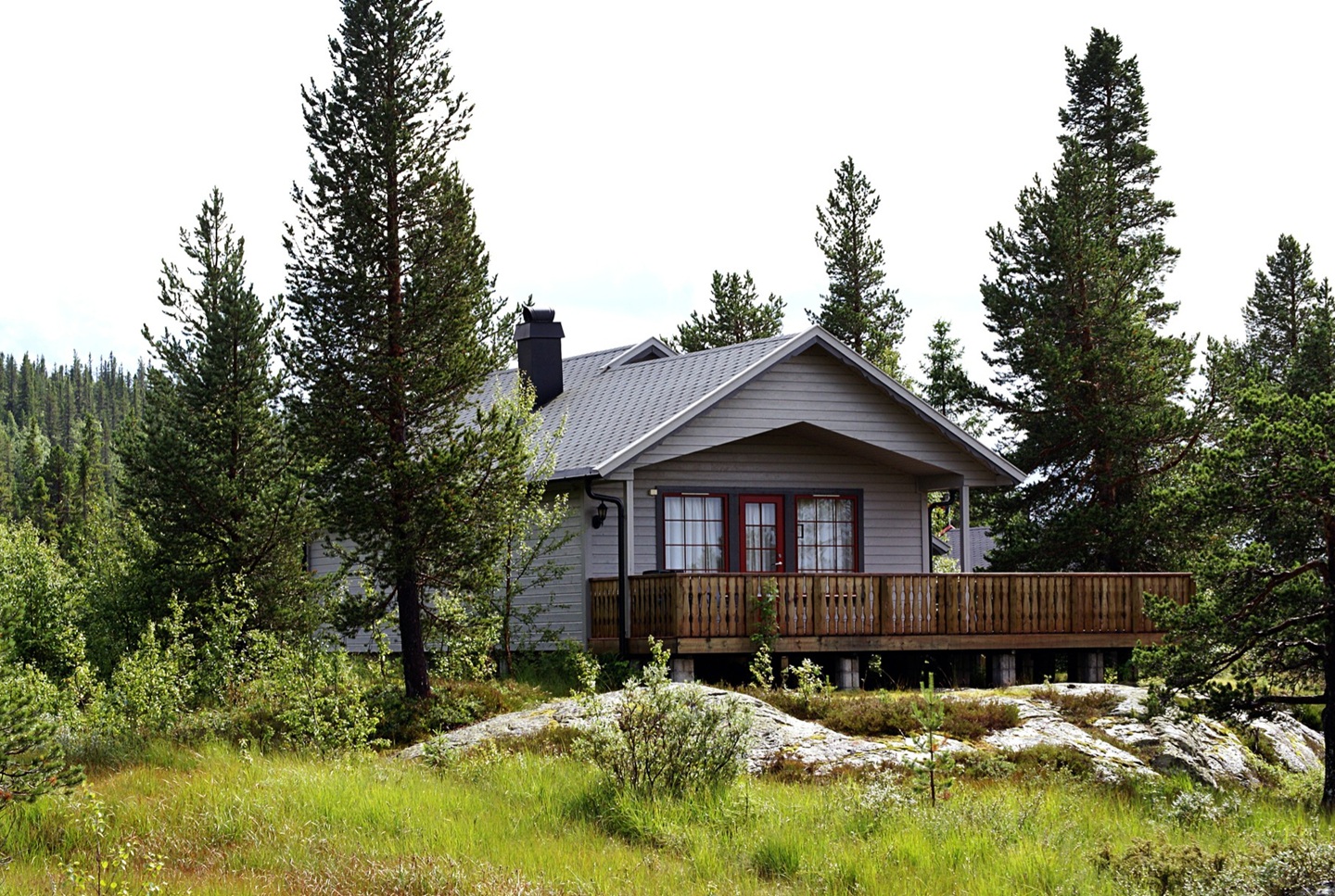
The dirt road to the cabin came up in the dark, my headlights pulling shapes out of the shadows. When the cabin appeared, I stopped the car and sat there for a moment, taking it in. It was smaller than I had imagined and older-looking, the roof sagging slightly at one edge, the shutters weathered to a gray that might once have been white or green. The porch slanted a few degrees off level.
I got out and stood in the cold and listened. The quiet up here was not the absence of sound but its own kind of sound, layered and deep, the creak of trees and the far-off movement of water and the particular quality of air that exists nowhere near a city. I breathed it in and stood there for a moment longer than I needed to.
Then I walked up the porch steps, heard them groan acceptably under my boots, and fit the key into the lock. It turned smoothly. Inside, I reached for the light switch expecting nothing and found instead the warm glow of a working bulb filling a small, unexpectedly decent living room. The wood floors were polished. The furniture was worn but intact. A neat stack of firewood leaned against the stone fireplace. Someone had been taking care of this place.
The smell was what stopped me completely. Not mildew, not the dead-air smell of an abandoned building. Pine and something faintly like old coffee and leather. The smell of a place that had been lived in and loved.
I was still standing in the doorway when I noticed the photograph on the mantle.
My father, young, barely twenty years old by the look of him, standing in front of this same cabin with an older woman I had never seen in any family photo or heard described at any family gathering. On the back of the frame, in my father’s precise handwriting: With Grandma Rose, 1962. The place where everything began.
I was still studying the woman’s face, those calm watchful eyes, when a knock at the door nearly made me reach for a sidearm I wasn’t carrying.
The man on the porch was older, perhaps seventy, holding a casserole dish with the natural ease of someone who had done this before. He had the posture and the haircut of a career military man, precise in the way that never fully leaves you.
“Mrs. Whitmore,” he called.
I opened the door. “Captain Whitmore. Who are you?”
He smiled, unhurried. “Name’s Jack Reynolds. Marine Corps, retired. Live two cabins down. Your father asked me to check in when the time came. He said you might need a friend out here.” He held out the dish. “Beef stew. Figured you’d be hungry after the drive.”
I took it and stepped aside. He didn’t come in, which I appreciated. He stood on the porch and told me that my father had come up the week before he died, spent three days organizing things, and had been very specific about what Jack should say.
“He told me to remind you,” Jack said, “that sometimes the most valuable things are hidden where people least expect to find them.” He paused. “And he said you should check under the kitchen floorboard when you’re ready.”
He tipped his head, walked back down the steps, and was gone before I could formulate a follow-up question.
I set the stew on the counter and looked at the kitchen floor. Old pine planks, scuffed from decades of boots and chairs. I ran my hand along the boards until one shifted under my palm with the faint give of a plank not fully secured. I worked it up with a pocketknife. Underneath, wrapped in oilcloth and set into a hollow in the subfloor, was a metal box.
I carried it to the table, wiped the dust away, and opened it. Inside were documents, photographs, and a letter addressed to me in my father’s handwriting. But what made me sit down hard and press one hand flat against the tabletop was the geological survey folded beneath the letter. My training had given me the ability to extract the essential information from a document quickly, and the words that surfaced as I scanned it were words that changed everything.
Granite. Feldspar. Lithium deposits. Estimated commercial value: substantial.
The Adirondack cabin my sister had called my perfect destination, a shack for a stinking woman with nothing better to her name, was sitting on top of mineral deposits worth tens of millions of dollars.
My father had not left me the lesser inheritance. He had left me the one that required someone trustworthy to hold.
I opened the letter. His handwriting was precise and slightly uneven toward the end, the way it had been in the last years when his hands had begun to trouble him.
My dearest Hannah, he had written. If you are reading this, then I was right about Megan. I pray I was wrong, but I saw the signs. The way she looks at everything as if it already belongs to her. The way she dismisses you when she thinks I’m not listening.
He wrote about Rose. She had not been his grandmother by blood but had taken him in after his parents died, when he was small and had nowhere else to go. This cabin had been hers. This land had been hers. She had studied it for most of her adult life and understood its value but had protected it rather than exploited it, believing it would one day provide something more enduring than money. Security, she had told him. Independence. The kind of strength that does not depend on anyone’s permission.
I left this to you, he wrote, because you are the only one steady enough to hold it without dropping it. The army taught you discipline. This land will give you something the army could not. A foundation that is yours alone.
He had anticipated Megan’s response. He had spoken with Robert Chen and prepared legal protections against every move she would make. He had arranged for Jack to be there when I arrived. He had known, with the exhausted clarity of a father who has watched his daughters for thirty years, exactly what was coming.
I folded the letter and sat for a long time in the quiet cabin, listening to the Adirondack night outside the windows. Then I heated up Jack’s stew, which was, as it turned out, genuinely excellent, and ate it slowly at the table with my father’s documents spread around me, going through each page in the lamplight.
By the time I went to sleep on the old couch, something had settled in me that had been loose and rattling for days. Not peace, exactly. Something more like readiness.
The next morning came with sunlight through thin curtains and the smell of cold pine air, and it came with the sound of tires on the gravel drive.
Two men stood near a black SUV at the edge of the property, clipboards in hand, scanning the tree line. They wore the business-casual combination of people trying to look professional without looking threatening. I stepped onto the porch.
“Can I help you?”
The nearer one smiled with the practiced ease of a man accustomed to smoothing over intrusions. He was from Summit Realty Partners, he said. Just checking property lines. Preliminary inspection. Her sister had indicated it was a family holding.
“Get off my land,” I said. “Now. Before I call the sheriff.”
They exchanged a look and retreated to the SUV without further discussion. I watched the dust settle behind them and then went inside and called Robert Chen, who had been expecting exactly this kind of call and told me that everything my father had prepared was legally airtight, that Megan had no standing, and that the best thing I could do was document everything and let him handle whatever she sent at me next.
I documented. I photographed the tire tracks that led off the road into the brush near the property line, evidence that they had done more than a casual drive-by. I called my mother and told her what had happened, and my mother told me, with the weary patience of a woman who had spent years managing the distance between two daughters, that Megan was only trying to ensure the property was handled responsibly.
“Responsibly by whom?” I asked. “By the daughter who inherited it or by the one who keeps sending strangers onto it?”
My mother said I was being dramatic and that Megan was thinking of the family’s future, and I hung up because the conversation had no floor, it would keep going down indefinitely, and I was done descending.
I spent the next several days working. The cabin needed attention, not rescue, just the steady application of effort, and I gave it that. I scrubbed floors and cleared debris and replaced a broken porch board and patched a drafty window. Jack appeared with tools and worked alongside me for hours without requiring conversation, which was one of the things I had come to value about him deeply and quickly. We worked in the rhythm that two military people work in when they understand each other without having to explain everything, and by the third day the cabin had stopped looking forgotten and had started looking like somewhere a person had chosen to be.
“You ever think about what you want this place to become?” Jack asked one evening, sitting on the repaired porch steps with a cold beer in hand.
I looked out at the lake, which the last light was turning a deep amber.
“Not just a cabin,” I said. “Not just a mineral asset. Something that lasts. Something Dad was pointing toward in his letter when he talked about building, about helping people who’ve been pushed aside.”
Jack was quiet for a moment. “What kind of people?”
“Veterans,” I said. “Women who’ve been written off by their families. People who need a place to land and the tools to rebuild.”
He considered this with the slow gravity he brought to everything. “That’s a hell of an objective, Captain.”
“I know.”
He raised his bottle. “Then you build it.”
I drove to Albany to meet with Robert Chen. His office was high up in a building overlooking the Hudson, and he shook my hand with a firm grip and the settled calm of a man who had known my father well enough to understand what kind of daughter he had trusted with this.
He opened the metal box with practiced care, and when he reached the geological survey, one eyebrow lifted fractionally. He read for a moment. Then he looked up at me across the polished desk.
“Your sister is in for a significant surprise,” he said. “The mineral rights alone are worth tens of millions. The lithium deposits especially. In today’s market, this is extraordinary.”
“She’s already tried to send appraisers onto the property,” I said.
He nodded as if this confirmed something he had expected. He pulled out a thick folder and slid it toward me. Deeds, titles, mineral rights, all signed and notarized and filed. Every protection my father had thought to put in place was in place. Megan could challenge, but she would spend years losing, and the outcome would not change.
“Your father was a thorough man,” Robert said.
“He was,” I agreed.
“He also understood people very well.”
I looked at the stack of documents, at my father’s signature appearing again and again on pages he had signed while he was dying, preparing for a future he would not be part of. The weight of that care, the love encoded in legal language and notarized seals, was almost too much to hold.
“He understood Megan,” I said.
“He understood you both,” Robert said carefully. “He chose accordingly.”
Megan filed her legal contest three weeks later. Robert’s response was as swift and decisive as he had promised. The filing had no legal merit and Robert said so in terms that left no room for interpretation. But Megan was not filing because she expected to win in court. She was filing because lawsuits are expensive and slow and exhausting, because she was betting that the accumulated weight of the process would wear me down faster than the outcome.
She did not know me very well.
I called them both and asked them to come to the cabin for dinner. My mother hesitated and then agreed. Megan agreed with the aggressive confidence of someone walking into a negotiation she believes she has already won.
I cleaned the cabin to inspection standard. I cooked pot roast and roasted potatoes and bread from the bakery in town, because my father would have wanted food on the table and I still believed in honoring the things he would have wanted. I laid the documents out on the kitchen counter in neat stacks. Every deed, every survey, every notarized certificate of ownership.
Megan arrived in a cream-colored dress, heels clicking on the gravel drive, surveying the cabin with the appraiser’s eye she had apparently decided to make permanent.
She sat down and ate with the performance of someone tolerating an inconvenience, commenting on the drafts, on the modest furniture, on the general rustic inadequacy of everything around her. My mother ate quietly. I ate and waited.
When Megan set her fork down and leaned back and asked with theatrical patience what this was all about, I went to the counter and brought the geological survey to the table and set it in front of her without comment.
She picked it up. Read it. Set it down. Read it again.
The color left her face.
“Lithium deposits,” she said, and her voice had lost its practiced smoothness. “Worth tens of millions.”
“Yes,” I said.
“This is Dad’s land.”
“This is my land,” I said. “He left it to me. Not because he forgot you existed or because he was being cruel. Because he knew what you would do with it. You would sell it. You would take everything Rose protected and turn it into cash and spend the cash, and in five years there would be nothing left and no way to undo it. He knew that about you. He knew it for a long time.”
She shoved the survey back across the table. “You can’t keep this from me. It’s family.”
“It is family,” I said. “It’s what he chose for our family, which was for me to hold this land and build something with it. Not sell it. Build something.”
“Build what?” she snapped. “Some charity? While you sit on millions?”
“A foundation,” I said. “For veterans. For women who’ve been discarded by families like ours. Housing, training, counseling. A place for people to land when the people who were supposed to catch them didn’t.”
My mother, who had been quiet through all of it, made a small sound.
Megan’s jaw tightened. “You’re choosing strangers over your own blood.”
“No,” I said. “I’m choosing to do what Dad asked me to do. That has nothing to do with strangers and everything to do with honoring him.”
The argument that followed was loud in some places and very quiet in others, the way arguments are when the people having them are saying things they have been carrying for years. Megan threatened courts and appeals and a campaign of sustained legal harassment. I told her to proceed, that Robert had prepared for exactly that scenario and that she would spend more money losing than she would ever recover.
Then Megan turned to our mother. “Tell her,” she said. “Tell her she’s being unreasonable.”
My mother looked at the documents spread across the table. She looked at the photograph on the mantle, my father young and smiling beside a woman with calm, watchful eyes. She looked at her hands in her lap.
“Megan,” she said quietly. “Enough.”
Megan stared at her. “What?”
“Your father’s wishes were clear.” My mother’s voice cracked on the last word but did not break entirely. “I should have said that from the beginning. I should have said a great many things I didn’t say. But I’m saying them now.”
Megan stood so fast her chair scraped hard against the floor. She said things then that I will not repeat, the kind of things that come out of people when they realize they have lost and have no graceful way to acknowledge it. Then she picked up her bag and walked out. Her car left a rooster tail of dust and gravel at the end of the drive, and then it was quiet.
My mother sat at the table for a long time without speaking. I poured her tea and set it in front of her and sat down.
“I didn’t know the extent of what he’d prepared,” she said finally.
“I know.”
“I sat silent when she humiliated you. I chose the easier thing. I am sorry for that, Hannah. I mean it.”
I looked at her across the table for a moment, at the lines in her face that I had known my whole life, at the exhaustion underneath the composure she always maintained so carefully.
“I know you do,” I said. “That’s enough for tonight.”
She nodded, and we sat together in the warm lamp-lit kitchen of the cabin that was mine, and outside the Adirondack night was very quiet.
The Whitmore Veterans and Women Foundation held its opening on a Tuesday in early autumn when the leaves were just beginning to turn and the light in the mountains had that particular quality of things that are beautiful because they will not last. A ribbon in deep green, the color I had painted the cabin’s front door, stretched across the entrance of the new building that had gone up on a cleared portion of the land over the previous eight months. Reporters stood in small clusters. A group of veterans in jacket and jeans spoke with young mothers holding children by the hand. Local officials moved through the crowd with the enthusiastic attentiveness of people who have recently discovered that a project is successful and would like some of its proximity.
Jack stood near the tree line wearing his Marine Corps cap and holding a coffee like he owned the morning, which in many ways he did.
“Your father would be proud,” he said when I walked over to him.
“I think so,” I said.
I stepped to the podium and looked out at the people assembled on the lawn and felt, for the first time in as long as I could remember, that I was standing exactly where I was supposed to be standing.
“This land was supposed to be forgotten,” I said. “An old cabin that people thought was worthless. Some people said so out loud. They thought they were diminishing me when they said it, but what they were really doing was showing me what they were capable of seeing and what they weren’t.”
I paused, finding my mother’s face in the front row. She sat straight-backed and still, her hands clasped in her lap, her eyes on me.
“My father and my grandmother before him believed this land could carry something larger than wealth. They believed in the value of things that last. Today this foundation will begin providing housing, training, and support for veterans and for women who have been written off by their families or their circumstances. Not because they deserved to be, but because sometimes the people who are supposed to hold you up let go, and you need somewhere to land.”
The applause was not polite. It was the kind that comes from people who believe what they are hearing because it resembles their own experience.
After the ribbon was cut and the crowd moved inside, I slipped away to the dock. The lake was calm, catching the afternoon sun in long bright ribbons across its surface. I stood at the end of the dock and looked at the water and thought about the night I had arrived here in the dark, headlights catching the sagging roofline, my heart tight with everything the day had contained.
My mother appeared beside me after a few minutes, taking my arm without asking.
“I was wrong about you,” she said. Her voice was steady, though I could hear what it cost her to hold it that way. “I was wrong for a long time, and I am proud of you. I am genuinely proud of you.”
I pressed her arm against mine and looked out at the lake.
“That means more than you know,” I said.
Behind us, the new building was alive with voices, with the ordinary noise of people finding one another and beginning the long, difficult, necessary work of rebuilding. The sound of it carried across the water, warm and complicated and real.
I thought about Megan, somewhere in the world still chasing the next deal, still certain that wealth was a measure of winning. I felt no particular satisfaction about how things had gone, no clean vindication. What I felt was simpler and harder to name. Something that had to do with standing on ground that was mine, built by people who had trusted me with it, and choosing to use it in a way that they would have recognized as right.
I reached into my jacket pocket and found the old ring, my father’s, that I had taken from the box. The stone caught the light. I put it on.
The wind moved across the lake and through the turning leaves, carrying the voices from the building, and I stood there with my mother beside me and let it.
My sister had called me a stinking woman in front of everyone and told me I was inheriting worthless scraps. She had not been wrong about the cabin, exactly. It was old and drafty and imperfectly built on land that no one had properly valued in decades.
But worthless is not the same as without worth. The difference between those two things is the whole story.
My father knew that. Grandma Rose had known it before him. And standing on that dock with the foundation alive behind me and the lake stretching out in every direction, I understood it in a way I would carry forward for the rest of my life.
You do not have to be loud to have value. You do not have to be chosen by everyone. You only have to be trusted by the right person, at the right moment, with something worth protecting.
My father had trusted me.
I had not dropped what he gave me.
That, in the end, was the whole of it.