The Land Remembers
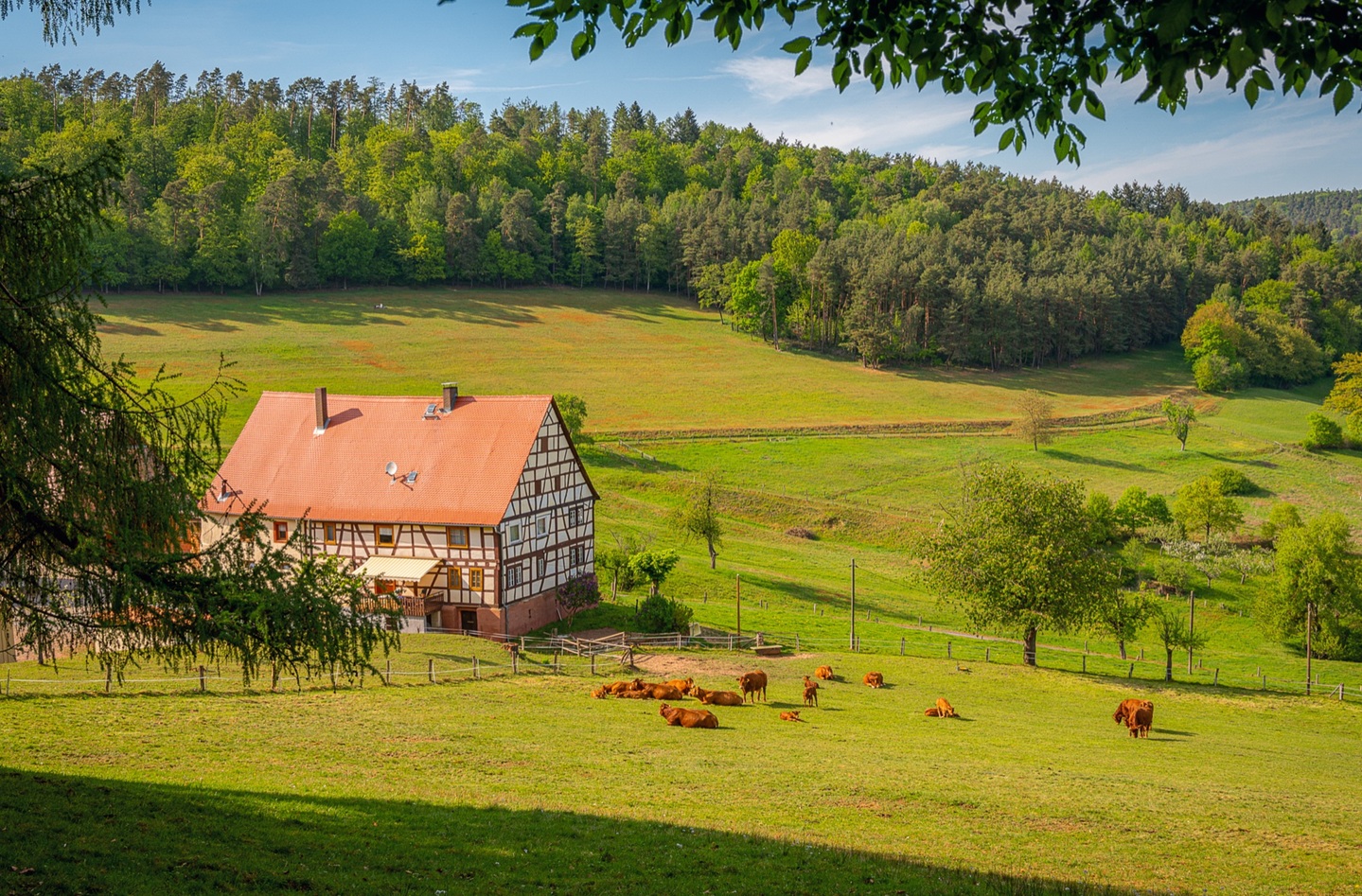
Hadley Carter was thirty-one, and until that morning, she had never seriously believed Carter Ridge Farm could be taken from her. The place had outlived droughts, debts, bad harvests, and three generations of Carters. Her grandfather used to say the land remembered who loved it, and standing there with dust on her boots and wind moving through the corn, she could almost hear him saying it again.
Her father said it the way he said most things: without preamble, without softness, loud enough for the hired hands near the equipment shed to hear.
“It’s sold.”
Hadley stood still. The corn moved around her in long green waves. The afternoon light lay across the fields the way it always had, flat and golden, the kind of light that made the farm look like something that would last.
“To a developer,” her father continued. “It’s done.”
Thomas Carter folded his arms the way he did when he wanted his body to do the work his certainty couldn’t quite manage alone. Beside him, Rebecca Carter stood with her arms crossed and her chin slightly raised, wearing the expression she reserved for moments when she believed she had finally won something. Behind them stood a man in a pressed button-down shirt holding a folder and glancing at his watch like Carter Ridge Farm was just another appointment on his calendar.
Hadley looked at all three of them. Then she asked the only question that mattered.
“Grandpa’s estate hasn’t been settled yet.”
Her father’s eyes narrowed. “Your grandfather is gone,” he said. “This land was ours to deal with. You should be grateful we told you at all.”
Her mother turned slightly toward the man with the folder, as if Hadley were providing unexpected entertainment.
“Who are you?” Hadley asked him.
He straightened and produced a rehearsed smile. “Daniel Pierce. Redwood Horizon Development. We’re excited to bring housing and opportunity to Silverbrook County.”
He said it the way people say things they’ve been paid to believe.
Hadley’s father shoved a stack of papers toward her chest. “Sign,” he said. “Stop acting entitled.”
She let the papers hover between them. “Sign what?”
“Acknowledgement. Consent. Whatever the lawyers called it.” He waved a hand. “You don’t own anything here. This makes the process easier.”
Her mother leaned slightly forward, her voice dropping into the register she used when she wanted something to stick. “You don’t own anything here,” she repeated.
Hadley looked at the papers. She took them, because paper carries ink and ink carries timelines and she was already thinking about what could be found at the county office. She looked at the first page long enough to understand what she was looking at, which was not a real legal document, just a vague paragraph with a blank line waiting for her signature, the kind of thing designed not to protect anyone but to silence someone specific.
She handed them back.
“No.”
Her father’s face reddened. “Then watch the bulldozers arrive.”
Her mother stepped closer, dropping her voice further. “You always needed to be the center of things,” she murmured. “That’s why you ended up alone.”
Hadley didn’t answer. She didn’t give her mother the reaction she was looking for. She turned around, walked to her truck, and drove away from Carter Ridge Farm without slamming the door, without spinning gravel, without performing any of the emotions her parents had arranged the scene to provoke.
The place that mattered now was the county office.
She thought about her grandfather while she drove. Arthur Carter had been a precise man, not cold, but careful in the way of someone who had watched property disputes tear apart families he knew and decided to think ahead. The summer she came home from college, she had found him on the porch with a ledger and an old manila envelope resting on his knee, and he had looked up at her and said, someday you’ll need proof. People start acting different when land turns into money.
She had thought he meant taxes, or maybe a boundary dispute with a neighbor. She had not understood he meant her own parents.
The Silverbrook County Land Records Office looked like every county government office in America: slightly outdated, faintly smelling of toner and old carpet, staffed by people who had seen more family catastrophes than they ever expected when they took the job. The lobby was quiet except for the soft sound of someone stamping documents at the far counter.
Hadley walked up and waited.
The clerk who looked up was a woman in her fifties with her hair pulled back tightly and reading glasses hanging from a chain around her neck. Her name plate read Janet Holloway. She had the expression of someone who had watched paperwork dismantle more lives than most lawyers.
“I need the deed history for Carter Ridge Farm,” Hadley said, “and the probate records for my grandfather, Arthur Carter.”
Janet entered the address. The room was quiet enough that the keyboard sounded louder than it should have. Hadley watched the monitor’s reflection shift in Janet’s glasses, and she watched Janet’s expression shift too.
Not alarm. The more careful thing: recognition.
Janet leaned slightly closer to the screen. “What’s your name?” she asked, her tone gone very even.
“Hadley Carter.”
“And your relationship to Arthur Carter?”
“Granddaughter.”
Janet nodded once. “One moment.”
She stood up, walked toward the back, and came back without a binder. She placed a thin folder on the counter with the kind of deliberateness that suggested she was being careful about how she handled it.
“The parcel shows a recent transfer,” she said.
Hadley’s pulse didn’t quicken. It focused. “Recorded?” she asked.
“Yes. Recorded yesterday.”
Yesterday. While Hadley had been at work, while her phone had been silent, while her parents had probably celebrated what they believed was an irreversible fait accompli.
“Can you print the last two recorded instruments?” Hadley asked. “With instrument numbers and the grantor information.”
The printer ran. Two sheets slid out with official stamps and barcodes. Janet placed them on the counter. The buyer’s name was there: Redwood Horizon Development. But the grantor line was what made Hadley’s jaw tighten.
It didn’t say Thomas Carter. It didn’t say Rebecca Carter.
It said Estate of Arthur Carter.
“There’s an estate transfer,” Hadley said quietly. “Where’s the probate case?”
Janet clicked through another system. Her frown deepened as she scrolled. “There’s no active probate case under Arthur Carter in Silverbrook County,” she said slowly. “Nothing filed.”
Hadley kept her voice level. “Then how was estate property transferred?”
Janet stared at the screen a moment longer, scrolled once, and stopped. Something in her posture changed, a small settling, the kind that happens when someone realizes they’re looking at something they didn’t expect. She opened a secondary panel without explaining why.
“There’s an attached packet,” she said. “Older scan.”
She clicked again. A folder icon appeared on her screen labeled simply: scanned packet. Janet leaned toward it, then leaned toward Hadley, and when she spoke, her voice had dropped enough that the other people at nearby counters couldn’t hear.
“This was never filed,” she said, “and it changes who owns the farm.”
Hadley didn’t move for a moment. Not because she was surprised, but because she was absorbing the precision of it. If there was a will inside an unprocessed packet, her parents hadn’t just sold land they didn’t own. They had tried to outrun a document before anyone knew to look for it.
“Print it,” Hadley said. “Certified copy if possible.”
Janet hesitated once. “I can print what’s scanned,” she said carefully. “But I can’t give legal advice.”
“I’m asking for records,” Hadley said. “And I’d like the deed history certified.”
Janet nodded. Then she did something Hadley hadn’t expected. She turned her monitor slightly and opened an internal access log, a panel that tracked when county records had been viewed.
“Before I print,” Janet said quietly, “I need to check if this packet was accessed recently.”
Hadley felt something tighten in her chest. “Why?”
Janet was already scrolling. “Because when something disappears and then appears attached to a transfer, it usually means someone already knew it was there.”
Her eyes moved slowly down the log. Then she stopped. She looked up at Hadley for less than a second, just long enough to communicate that the answer mattered.
“Viewed yesterday,” she said softly. “By Rebecca Carter. Timestamped yesterday morning, less than one hour before the estate transfer to Redwood Horizon Development was recorded.”
Hadley’s throat went cold. “She came here,” she said.
“She used a public terminal under her ID,” Janet said. “That creates a trace.”
“The best kind,” Hadley said.
Janet straightened. “I’m going to get my supervisor. A deposited will packet requires different handling.”
She disappeared through the door behind the counter. Hadley stood at the counter holding the two printed deed records, staring at the grantor line that said Estate of Arthur Carter, thinking about what it meant that her mother had stood in this building yesterday and looked at a will and then signed a statement claiming it didn’t exist.
Martin Cole, Records Supervisor, appeared with Janet a minute later. He wore a gray cardigan and had a badge clipped to his belt and the demeanor of someone who had decided years ago that his job was to protect the record, not to manage how people felt about what the record contained.
Hadley explained, briefly, what she had found: a recorded transfer without probate, an access log showing her mother had viewed the deposited packet the day before, and a signed affidavit claiming the will didn’t exist.
Martin Cole’s mouth tightened. He looked at Janet’s monitor, then back at Hadley. “The packet,” he said carefully, “appears to be a deposited will placed here for safekeeping.”
The words settled into the room like something heavy being set down.
Hadley’s grandfather had mentioned an envelope once, briefly, the summer before he died. He hadn’t been sentimental about it. He had been deliberate.
“I need a certified copy,” Hadley said.
Martin nodded toward Janet, who opened the scanned packet and brought the first page to the screen. A cover sheet appeared with Arthur Carter’s name and a deposit stamp from several years prior. Then the will itself appeared, scanned slightly crooked, as if whoever had fed it into the machine had no idea they were digitizing something that would matter this much.
Janet printed it. Multiple pages slid out. Martin gathered them, added a certification sheet, stamped it with his own stamp, signed it, and placed the packet on the counter.
Hadley turned the first page slowly.
Last Will and Testament of Arthur Carter.
She moved through the document with the controlled efficiency of someone who already half knew what she would find. The farm appeared with its full legal description, parcel numbers and boundary lines both, the language of someone who had anticipated that people would later try to claim he meant something else.
Then she reached the line that changed everything.
Her grandfather had left Carter Ridge Farm to her. Not jointly. Not eventually. To her. And he had named an executor.
Hadley Carter, Executor.
Beside her at the counter, her husband Lucas had come in quietly and was reading over her shoulder. She heard his breath catch.
“He gave it to you,” he said softly.
“Yes.”
Janet’s voice came gently. “There’s another clause,” she said. “About contests.”
Hadley turned the page. A no-contest clause, the language of an experienced estate attorney, the kind that made anyone thinking about challenging the will stop and calculate the cost. It hadn’t stopped her parents, which told her everything she needed to know about how convinced they had been that no one would ever find this document.
She looked back at Martin. “If this was deposited here,” she said, “how was estate property transferred yesterday without probate?”
Martin nodded toward Janet, who reopened the recorded instrument and scrolled to the list of attachments.
“Affidavit of heirship,” Janet said.
Of course. The fastest tool in rural property fraud.
Janet pulled up the document. It claimed Arthur Carter had died without a will. It listed his heirs as Thomas Carter and Rebecca Carter and stated they had authority to transfer estate property to Redwood Horizon Development. Both signatures notarized. The witness addresses were both the same P.O. box.
“And this was filed,” Hadley said, “the day after my mother viewed the will.”
Janet nodded. “Yes.”
Hadley set her jaw. “Please print certified copies of the affidavit, the transfer instrument, and the access log showing Rebecca Carter viewed the deposited will yesterday.”
Martin provided everything. When Hadley stepped to the side and called Olivia Grant, her probate attorney, she was already holding a stack of documents that made the case for her.
Olivia answered on the second ring.
“My parents filed an affidavit of heirship yesterday and transferred Carter Ridge Farm to a developer,” Hadley said. “The county office just found a deposited will that was never probated. It names me as beneficiary and executor. The access log shows my mother viewed it yesterday before the transfer was recorded.”
Olivia went quiet for a half second, the kind of silence that means she was already mapping the legal terrain.
“You’re filing for probate today,” she said. “Emergency petition. And we’re recording a notice of pending action against the property immediately.”
“So the developer can’t close,” Hadley said.
“No clean title means no closing,” Olivia confirmed. “And if anyone enters or begins work before the court resolves this, we get a temporary restraining order. But first I need the certified will and the recorded instruments. Can you scan them?”
“Give me ten minutes,” Hadley said.
She photographed everything at the public kiosk and sent the images to Olivia’s office. Then she walked down the hall to the probate window.
The clerk there was young but tired in the way of county employees who had learned early that other people’s crises arrive on their own schedule. She flipped through the will’s first pages and paused when she reached the deposit stamp.
“This is a deposited will for safekeeping,” she said slowly.
“Yes,” Hadley said. “And the access log shows my mother viewed it yesterday before the transfer was recorded.”
That sentence changed the clerk’s posture. She asked for the decedent’s name, searched the system, frowned.
“There’s no case on file,” she said quietly. “The estate hasn’t been opened.”
“Which means the transfer shouldn’t have happened,” Hadley said.
The clerk slid a petition form under the glass. Hadley filled it out deliberately. When she reached the line for proposed executor, she wrote her own name without hesitation. When asked whether a will existed, she checked yes and noted the certified copy was attached.
She paid the filing fee. The receipt printer chirped. The clerk stamped the packet and handed back a sheet with a fresh case number printed at the top. Seeing that number beside her grandfather’s name felt like the ground stabilizing beneath her feet.
“I also need an emergency motion attached,” Hadley said. “A survey crew is scheduled for tomorrow.”
The clerk hesitated, then nodded. “Attach your attorney’s information.”
Hadley slid Olivia Grant’s card under the glass.
Back in the lobby, she called Olivia with the case number and received two PDF attachments by return: Notice of Probate Filing and Notice of Pending Action. She printed them at the public kiosk and returned to Janet Holloway’s counter.
Janet looked up and recognized her without needing to ask.
“You opened probate,” she said.
“Yes. I need to record these notices against the Carter Ridge Farm parcel today.”
Janet took the documents, confirmed the case number, and told her to wait ten minutes. Hadley stood in the lobby watching the entrance, half expecting her parents to walk through the doors. They didn’t appear, which meant they were still operating with the confidence of people who believed the story had already been written.
Janet returned with the recorded documents, instrument numbers and barcodes and a large official stamp across each page.
“Anyone searching the title will see the pending probate action,” Janet said quietly. She tapped the instrument number with her pen. “It won’t erase what they recorded. But it clouds the title.”
“And warns the developer,” Hadley said.
“Yes.”
Hadley called the developer from the parking lot, using the number on the paperwork her father had pushed into her hands that morning. She was transferred to Andrew Whitaker, Redwood Horizon’s legal counsel.
She told him what she had found. The will. The access log. The affidavit claiming no will existed. The notices now recorded against the parcel.
Whitaker was quiet for several seconds.
“If what you’re describing is accurate,” he said carefully, “your parents committed fraud against the buyer.”
“Yes.”
Another pause. “Redwood Horizon will not proceed with any entry or development activity until this matter is resolved.”
“Put that in writing,” Hadley said.
“I will.”
When she ended the call, her phone buzzed. Her father.
Thomas Carter: You think paperwork can stop progress? The survey crew has already been paid.
She didn’t respond.
She drove back to Carter Ridge Farm in the fading afternoon light. The landscape looked exactly as it always had, the fields moving in their slow rhythms, the old tree line her grandfather had refused to clear. But as she turned onto the farm road, she saw fresh survey stakes along the edge of the front pasture, thin wooden markers with bright orange flags. And tied to the gate was a new sign: No Trespassing. Property Under Contract.
Her father stood at the gate with his arms folded and his chin lifted. Her mother leaned against his truck.
“Ready to sign?” he said when she stepped out.
She pulled the recorded notice receipt from her folder and held it up. “There’s a probate case now. A notice of pending action has been recorded against the parcel. The affidavit your attorney filed is false.”
Her mother’s smile sharpened rather than disappeared. “That won’t stop tomorrow,” she said. “The survey crew comes in the morning.”
“The sheriff doesn’t escort fraud,” Hadley said.
Her father’s eyes narrowed. “Watch.”
Then her phone buzzed with a voicemail notification. She looked at the preview text.
Miss Carter, this is the sheriff’s office. We received a complaint that you are trespassing on Redwood Horizon property.
She played it aloud without moving, so her parents could hear it. Her father’s mouth curved into satisfaction. Her mother’s eyes stayed bright.
“You called the sheriff on me,” Hadley said.
“You’re trespassing,” her father said.
She called the sheriff’s office back and asked the dispatcher for the incident number, the reporting party, and the assigned deputy. She repeated everything back to the dispatcher so it would appear in the recording. When the dispatcher confirmed the reporting party was Rebecca Carter, her mother’s eyes moved once to the phone before returning to their practiced stillness.
“Please add to the deputy’s notes,” Hadley said, “that a probate case was filed today and a notice of pending action has been recorded against the parcel. The recorder instrument numbers are available.”
“I’ll add that now,” the dispatcher said.
Hadley ended the call and began documenting the scene. Not dramatically, methodically. Photos of the sign, the survey stakes, the positions of her parents and the gate. Evidence of a scene, because that was what it was becoming.
A patrol SUV arrived fifteen minutes later. Deputy Ryan Caldwell stepped out with a body camera centered on his chest and a notebook already in his hand, moving with the unhurried patience of someone who had decided the best way to handle family land disputes was to let the documentation do the work.
“Are you Hadley Carter?” he asked.
“Yes.”
He nodded once. “They’re saying you’re trespassing on property under contract with Redwood Horizon.”
Her father stepped forward immediately. “She’s been harassing us,” Thomas said, his voice carrying across the gate. “We sold the farm. She refuses to accept it.”
The deputy turned to Hadley with the neutral expression of a man who had learned never to let the first version of a story determine the proceedings. “Your side?” he asked.
“There’s a probate case filed today for my grandfather’s estate,” Hadley said. “A will was located and filed this afternoon, and a notice of pending action was recorded against the parcel. If Redwood Horizon wants to challenge ownership, that happens in probate court. The title is currently clouded.”
Her mother scoffed. “She’s lying. There is no will.”
Hadley kept her eyes on the deputy. “My mother accessed the deposited will packet yesterday morning and then signed an affidavit claiming no will existed. The county access log shows it.”
The deputy’s expression tightened very slightly. He raised a hand toward her father. “Do you have paperwork?”
Her father shoved the stack forward. The deputy leafed through it carefully until he found where a recorded deed would appear. “Recording information,” he said. “Where’s the recorded deed?”
“It’s in process,” her father said, his jaw tight.
The deputy looked back at Hadley. “Do you have the recorded notice?”
She handed him the receipts, instrument numbers and timestamps and barcodes, and watched him read. Then he stepped aside and spoke into his radio.
“Dispatch, can you run a records check on this parcel and confirm any notices recorded today?”
He read off the instrument number. The radio crackled.
“Deputy Caldwell, dispatch here. Parcel shows a notice of pending action recorded this afternoon and a probate-related notice. Title flagged for dispute.”
The deputy’s jaw set. He turned back toward her parents.
“This is a civil dispute with active filings,” he said evenly. “I’m not removing her for trespassing tonight.”
Her father’s face flushed. “So she can just do whatever she wants?”
“No,” the deputy replied. “Neither can you.”
He looked at her mother. “You called in a trespassing complaint, but the record shows an active probate dispute. If you want to resolve ownership, you do that in court.”
Her mother raised her voice sharply. “She’s manipulating—”
“Ma’am. Step back.”
Her father tried one more angle. “The survey crew is coming tomorrow. And the sheriff will escort them.”
The deputy looked at him steadily. “No one is escorting anyone onto disputed property based on a private contract while a recorded pending action exists,” he said. “If a crew shows up, document it and call your attorneys.”
Hadley’s phone buzzed. An email from Andrew Whitaker. She didn’t wave it around. “Redwood Horizon’s legal counsel confirmed they won’t proceed with entry until the dispute is resolved,” she said.
The deputy glanced at her screen briefly and nodded.
Then he turned back to her parents and said the sentence that finally broke her mother’s composure.
“One more thing. The call log shows the reporting party is Rebecca Carter. If it turns out false statements were made to provoke a law enforcement response, that can be addressed.”
Her mother blinked twice. Her father opened his mouth and closed it.
The deputy took photos: the sign, the stakes, her parents’ paperwork, her recorder receipts. He wrote in his notebook while her father watched with barely controlled anger. When he finished, he looked at all of them.
“I’m not escalating this tonight. If a crew attempts entry or alters the property, call immediately.” He turned toward her parents. “Stop calling this in as trespassing while the record is flagged.”
Her mother forced a smile. “Of course, Deputy. We just want peace.”
Peace. The word she always used when she meant control.
The deputy returned to his SUV and drove away. Her parents remained at the gate in the fading light. Her mother stepped close and dropped her voice.
“You think you stopped us,” she said. “The will doesn’t matter if it was never filed.”
“The will matters,” Hadley said. “And the fact that you viewed it yesterday and paid for a copy of it matters even more.”
Her father pointed at her truck. “Go home. Because tomorrow you’re going to watch this farm change.”
Hadley didn’t argue. She got in her truck and drove straight to Olivia Grant’s office.
Olivia opened the door before she knocked. Documents were already laid out on the desk.
“Emergency TRO,” Olivia said immediately. “Duty judge tonight.”
“What do you need?” Hadley asked.
“Your affidavit and the strongest proof you have.”
Hadley placed the certified will on the desk. Then the access log. Then the receipt.
The receipt was the last thing she set down, and it was the thing Olivia stared at longest.
Rebecca Carter. Yesterday morning. Item description: deposited will packet copy fee.
Olivia looked up.
“This isn’t just a title dispute anymore,” she said.
“What is it?” Hadley asked.
“Evidence that your parents knew the will existed,” Olivia said quietly, “and still swore under oath that it didn’t.”
Her phone buzzed. The probate clerk. Olivia answered and listened, her expression going still and focused. She covered the receiver.
“They found something else in the packet,” she said. “Another page that wasn’t scanned with the first set. A handwritten codicil. Folded behind the last page.”
Hadley felt the room steady around her. “What does it say?”
A courier envelope was already on Olivia’s desk, delivered while they had been standing at the farm gate. Olivia laid the second page in front of Hadley.
Her grandfather’s handwriting. Not typed, not polished. A handwritten codicil dated years after the will, signed and witnessed, using the full legal description of Carter Ridge Farm as if Arthur Carter had understood that precision was the only thing standing between his intention and someone else’s convenient interpretation.
Olivia tapped the key paragraph.
“If Thomas Carter or Rebecca Carter attempt to sell, transfer, encumber, or contract the farm in any manner,” she read aloud, “they are immediately disinherited and the farm shall pass solely to Hadley Carter as trustee with instructions to record notice and seek immediate injunctive relief.”
Hadley looked at the page for a long time.
Her grandfather hadn’t just left her the farm. He had predicted this exact betrayal, written it down, signed it in front of witnesses, and hidden it in a building her parents apparently believed they could outmaneuver.
That night, Olivia filed the emergency request with the duty judge. No courtroom, no ceremony, just a video call from the office, the judge visible on screen with his reading glasses low and his tie loosened, a man who had long since stopped finding it remarkable that families did this to each other.
“Miss Carter,” he said, “I have your emergency motion. Tell me why this can’t wait.”
Olivia answered with the clean efficiency of someone who had organized the facts before Hadley even arrived at her door. The will. The access log. The receipt. The affidavit claiming no will existed. The codicil naming what would happen if the parents ever tried to sell.
The judge’s pen stopped over the receipt. He read it aloud to himself. Copy fee. Deposited will packet. Rebecca Carter. Yesterday.
Then he read the codicil paragraph. When he looked up, his expression was the expression of someone who had reached a conclusion and was not interested in reconsidering it.
“Miss Carter,” he said to Hadley, “are you requesting an order restraining entry or alteration of the property pending probate determination?”
“Yes,” she said. “Survey stakes were placed today. They’re trying to change the property before the court can act.”
The judge nodded once. “I’m granting the temporary restraining order. No entry by the developer. No survey work. No grading, staking, or alteration. No one represents authority over this parcel. Any violation is contempt.”
Then he added the sentence that landed heaviest.
“I’m directing the clerk to forward the affidavit of heirship and the will access receipt to the district attorney for review. If the affiant obtained the will and swore there was none, that is not a mistake.”
By midnight, the order had been served electronically. Olivia’s process server delivered it in person to her parents’ house. Andrew Whitaker received it on behalf of Redwood Horizon. The county recorder attached the instrument number to the parcel record.
The public record for Carter Ridge Farm now carried everything her parents had tried to bury: disputed, restrained, under court order.
Hadley drove back to the farm before sunrise the next morning and parked where she could see the gate.
The survey crew arrived just after dawn in two pickups. Equipment cases in the back, bright vests visible through the windshield. And behind them, a sheriff’s unit rolling in on the gravel road.
But it wasn’t an escort. It was Deputy Caldwell again, his body camera running, his notebook already out.
Her father stepped forward when he saw the deputy, his confidence still intact, his posture still the posture of a man who expected compliance.
“The survey crew is here,” Thomas said. “Tell her to leave.”
Deputy Caldwell looked at the document in his hand, not at Hadley, not at her father. He held up the temporary restraining order.
“I received a court order this morning,” he said. He read the key section aloud in a voice that carried across the gate. No entry. No disturbance of the property. No survey activity.
Then he turned toward the crew chief. “If you begin work, you’ll be documented violating a restraining order.”
The crew chief looked at her parents with the expression of someone silently communicating that he was not paid enough to become a party to whatever this was. He picked up his phone.
Her mother stepped forward, her voice sharp. “This is ridiculous,” Rebecca said. “She’s manipulating the court.”
“Ma’am,” the deputy said, “you’ve been placed on notice. Step back.”
Her father’s face went red. “We already sold it,” he said. “You can’t stop that.”
The deputy looked at him steadily. “Then you should have sold something you had the legal right to sell.”
Her mother turned toward Hadley, her voice rising so the survey crew could hear it.
“Your grandfather is gone. You don’t get to pretend you’re the queen of this land.”
Hadley held up the TRO and the recorded notices. “I’m not pretending,” she said. “I’m recording.”
That was when her father made the mistake.
He reached down and grabbed one of the survey stakes from the ground and pulled it out with both hands and hurled it into the ditch. Not because it accomplished anything legally. Because he was angry and anger had always worked for him before.
The deputy’s voice changed immediately.
“Sir. Stop.”
Her father spun toward him. “For what?”
“For violating the court order after being directed to stop.”
The handcuffs clicked around Thomas Carter’s wrists in the same wind that had always moved through the corn at Carter Ridge Farm. The same wind that had carried her grandfather’s voice across these fields for decades.
Her mother opened her mouth. Two additional patrol units were pulling onto the road.
“He’s an old man,” her mother said.
“He’s an adult,” the deputy replied, “and he was warned.”
As her father was guided to the SUV, one of the other deputies spoke quietly to Hadley.
“The district attorney’s office has already requested copies of the affidavit and the will access records.”
“They can have everything,” she said.
The survey crew packed up and left. The developer trucks never arrived. Carter Ridge Farm lay still in the morning light, exactly as it always had been, the fields turning gold as the sun came up, the old barn door moving slightly in the wind.
Probate court moved quickly after that. The will and the codicil were admitted. Hadley was appointed executor. The court ordered the fraudulent affidavit and the transfer challenged and initiated a quiet title action to undo the conveyance. Redwood Horizon’s legal team appeared in court furious in the restrained way of corporations that have just discovered they were sold a lie. They withdrew from the purchase, demanded restitution from her parents, and preserved every communication as evidence.
Her parents entered that courtroom expecting to cry their way back to some version of control. They walked out into a different set of facts entirely. The judge looked at the receipt and then at the affidavit and referred both of them for prosecution without further comment. The district attorney filed charges: filing a false instrument, perjury, attempted fraud against a purchaser.
They received arraignment dates and bond conditions and a no-contact order barring them from the farm while the case proceeded.
Her father eventually served time. Her mother accepted a plea agreement that included restitution and a permanent restriction from representing authority over any estate property.
Months later, the court restored title. The county recorder updated the public record to reflect the probate ruling. Hadley placed the farm into a legal structure designed to make what had happened impossible to repeat.
The corn still moved with the wind the same way it always had. The porch still creaked in the same places her grandfather had walked for forty years. The old tree line he had refused to cut down still stood along the western edge of the property, the same line she had looked toward the day her father said it’s done, the day she had decided to go and look at the record.
She stood at the gate one evening that autumn, the light going amber across the fields, and thought about what her grandfather had said about patience. Seeds disappear into the soil long before anyone sees what they become. What her parents had planted was deception. They had tended it carefully, believed it was solid, believed they had moved fast enough.
But the truth had been sitting in a filing cabinet in the county records office for years, waiting with the particular patience of documents that carry legal weight.
Every paper her parents had signed thinking it would bury what they had done had done the opposite. It had located them. It had put their names beside timestamps. It had created a chain of evidence that told exactly the story they had worked to prevent.
Her grandfather used to say the land remembered who loved it.
He had been right about that. He had also been right about something harder, something Hadley understood now in a way she hadn’t when she was young: that love is not enough on its own. That love needs to be protected, documented, recorded, placed in the right offices and stamped by the right hands, so that when someone comes along who believes they can take what they don’t own, the record is already there, waiting, impossible to argue with.
The light faded. The fields went quiet. She stayed at the gate a while longer.
Carter Ridge Farm was still there. The land still remembered.
And now, so did the county recorder’s office.