The first thing I noticed about Jacob was that he had my daughter’s smile.
Not the smile she learned somewhere, not the one she practiced in mirrors during the years she was figuring out who she was going to be. The bone structure of it. The way it started on one side a half second before the other. That small asymmetry I had watched across breakfast tables and school pickup lines and birthday cakes with the wrong number of candles because she always corrected me when I miscounted.
I noticed it, and then I dropped the bag of ice.
It split open on the kitchen floor. Cubes scattered everywhere, sliding under the fridge, skittering across the tile in all directions. My cousin Mark burst out laughing before he saw my face.
“Bruce,” he said, crouching down beside me. “Hey. You okay?”
I was already on my knees, scooping ice with my bare hands. My fingers went numb fast. I kept scooping anyway because it gave me something to do that was not looking at the living room, where a man stood with a drink in his hand, laughing with my sister Linda like he had known her for years. Like he belonged somewhere in the middle of my family.
He did not.
Nancy had told me she wanted to find him. She had said it carefully, sitting across from me at the kitchen table in my house, watching my face the way she had always watched my face, reading it for damage before she decided how much truth to offer. I had told her I understood, because I did understand, and because the feelings underneath that understanding were mine to manage, not hers to carry. She was an adult. She had a right to know where she came from. I believed that then and I believe it now.
I just had not expected him to be standing in the house I had bought her, in the room where an hour ago I had arranged snacks on the kitchen counter while she straightened picture frames and argued with me about where to put the good cheese.
Mark touched my shoulder.
“Is it the guy by the window?” he asked quietly.
I said nothing. I stacked ice into the cooler and did not answer.
“Bruce.”
“I’m fine,” I said.
He looked at me the way family looks at you when they know the word fine is doing heavy lifting it was not designed for. But he let it go, because Mark has always known when to push and when to stand beside a person and not say anything at all.
I stood up. I dried my hands on my jeans. I walked back out into the living room that smelled like Nancy’s candles and someone’s good perfume and the particular warmth of a house full of people who are genuinely happy to be somewhere.
Jacob was already moving toward me.
Nancy had positioned herself just slightly behind him, and the look on her face was one I recognized from when she was nine and had broken something by accident and was deciding whether to confess before I noticed or wait to see if I noticed at all. It was the look of someone braced for impact who is hoping impact does not come.
“Dad,” she said. “This is Jacob.”
He put his hand out. His handshake was firm and practiced, the kind of handshake a man rehearses because he has been in rooms where handshakes are evaluated. His smile was wide and warm and just a degree too ready, the smile of someone working hard at an impression.
“Bruce,” he said. “It’s really good to finally meet you. Turns out we share a daughter.”
He laughed a little at that, a sound that wanted the room’s permission.
My stomach twisted in a way I did not let reach my face.
“Nice to meet you,” I said, because those words existed for situations exactly like this one, situations where the true words would cause damage you cannot then undo.
Nancy watched us both. She did not look away.
“This is my biological father,” she said. “He’s hoping to rebuild our relationship. That’s why I invited him tonight.”
Jacob’s eyes moved to Nancy when she said it, checking her expression the way a man checks his footing on uncertain ground. He was not a bad person, I could see that. But he was a stranger performing the role of someone who belonged, and the performance had the slightly off quality of a song sung in a language you have memorized phonetically without understanding the words.
“I know this is a lot to take in,” he said, turning back to me. “I’m really grateful to be here. Nancy’s told me so much about you.”
His eyes flicked to her again when he said it. Still checking.
My daughter’s gaze stayed on my face.
“Dad,” she said quietly. “I think Uncle Mark could use some help with the cooler.”
Bless her for that. She had always known when I needed a door.
I nodded and moved back toward the kitchen, past the snack table, past Linda’s wide curious eyes, past the wrapped gift on the coffee table that looked expensive and told me nothing about the person who had bought it.
I crouched at the cooler and pretended to reorganize it.
Mark stood over me, already knowing.
“You’re not fine,” he said.
“I’m not fine,” I agreed.
He sat on the edge of the counter and waited, which is one of the things I have always loved about Mark. He does not fill silences with noise just to avoid them.
“I knew she wanted to find him,” I said. “I did not know tonight was the night.”
“Did you ask her to tell you first?”
I looked up at him.
“No,” I said.
He nodded slowly. “That’s why she didn’t.”
That hit the way true things hit, not like a blow but like cold water, clarifying.
In the living room I could hear Jacob’s voice, easy and sociable, rising and falling in the way of men who are good at making rooms like them. I heard Linda laugh. I heard the particular sound of a group of people shifting their attention toward someone new, the way a party does when a confident stranger knows how to enter it.
“He’s good at that,” Mark said, not unkindly.
“He is,” I said.
“Nancy knows the difference between good at rooms and worth having in your life.”
I didn’t say anything.
“Bruce,” Mark said. “She bought you a plaque.”
I looked up.
He nodded toward the hallway. “Little thing. Wood. In the back bedroom. I saw it when she was setting up. It says the man who chose to stay. She’s been planning something tonight. Whatever it is, it’s not about him.”
I stayed crouched at the cooler for a moment longer. Then I stood up.
I want to explain what that kind of moment costs, so that the rest of this makes sense. Not the moment at the party, though that had its own particular weight. The moment twenty-four years earlier when I first understood what I had signed up for.
I was thirty-four when I met Julia. We were at a friend’s dinner party, and she came in late because she had been stuck at work, and she sat across from me and immediately got into an argument with someone about city planning policy that I found completely compelling even though I had no strong feelings about city planning policy whatsoever. She was direct and sharp and laughed loudly at the things that actually deserved it. By the end of the evening I had decided I wanted to know her better.
On our third date she put her fork down in the middle of dinner and looked at me and said, “I want a child. That’s not negotiable for me. I need you to know that before this goes anywhere.”
I said, “Me too.”
It was true. It had always been true.
We tried for years. There were doctors and calendars and conversations conducted at the particular emotional frequency of people who are trying to hold hope and grief at the same time without letting go of either. Some nights Julia would sit on the edge of the bathtub staring at the tile floor, not crying, not talking, just sitting with the weight of it. I would sit beside her and rub slow circles on her back until her breathing steadied.
“We’re still okay,” I would say. “You and me. That part doesn’t change.”
When the doctor told us, finally, that her health would not allow it, she cried in the car in the hospital parking lot with the particular grief of someone who has been hoping against the odds and has now run out of odds. I reached over and took her hand.
“We can still be parents, Jules,” I said. “There are other ways.”
She wiped her face with the back of her hand. “Adoption? You mean that?”
“A child is a child,” I said. “Let’s do it. Let’s find a little human to adore.”
So we started the process. And at the end of it, there was Nancy.
She was three years old when we brought her home. She stood in our doorway with a small backpack clutched against her chest and looked at us with the careful, watchful expression of a child who has learned not to invest too quickly in new situations. Julia crouched down and spoke to her in the gentlest voice, and I stood just behind Julia’s shoulder and held out my open hand.
Nancy looked at it. She did not take it. She looked at us both for a long moment, deciding something, and then walked past us into the house like someone testing whether the floor would hold.
Her file said her biological mother had left when she was eighteen months old. Father unknown. There was a blank line on the paperwork where that information would have gone, an empty space that had once been a person who made a choice.
Julia read that and went very quiet.
“How does someone do that?” she asked, and her voice was small in a way it rarely was.
I did not have an answer.
I only knew that Nancy flinched at sudden noises and lined her shoes by the front door in careful pairs, as if keeping them ready. As if she needed to know she could leave if she had to. As if leaving was the thing she understood about homes.
We had two years together, Julia and I. Two years of becoming parents in the slow, unglamorous way, learning that Nancy hated lettuce in her sandwiches and loved the color pink but refused to wear it and needed to be told the plan for each day before it started because surprise, even good surprise, set her on edge. Two years of Julia learning to read bedtime stories without rushing the endings and of me learning that the right kind of knock on a small person’s door, three knocks, not two, made her shoulders drop instead of rise.
Two years.
Then I came home one afternoon and found a note on the kitchen counter, held down by the salt shaker.
It was brief. Julia had never been a person who used more words than she needed. She said she did not want this life anymore. She said she could not bond with Nancy, that she was losing me to a child who would never fully love her back, that she had to go. She said she was sorry.
There was no address. No phone number. She had just stopped.
I read the note twice, then a third time, waiting for it to change or reveal a second meaning it had been hiding. Then I folded it and put it in my pocket and went to check on Nancy.
She was in her room, sitting on the floor with a picture book in her lap, not reading it, just holding it. She looked up when I came in.
“Where’s Mom?”
The question was so direct it left no room for softening.
“Mom left, baby girl,” I said. “She’s not coming back.”
Nancy was five. She had already lost a mother once. She squeezed her eyes shut for a moment, very briefly, the way children do when they are trying to keep something from showing on their face. Then she opened them and looked at me with an expression that was too old for a five-year-old’s face.
“Are you leaving too?”
I had to crouch down to breathe properly. The question did something to my chest that I do not have precise language for.
“No,” I said. “I am right here. I am not going anywhere.”
She stared at me. Deciding again. Then she crossed the floor and put her arms around my neck and held on in the fierce, total way that small children hold on when they have decided to trust something despite the evidence.
That was the moment I became her father in a way that no paperwork had made me and no ceremony had performed. It was just a child in a room choosing me, and me understanding that I had better deserve it.
After Julia left, I became the kind of father who does not wait to be needed. I showed up before she asked, and stayed after she told me she was fine. I packed lunches every morning and learned her particular aversions and adjusted for them without comment. I held the back of her bicycle seat when she was learning to ride, running alongside her down the sidewalk while she screamed at me not to let go, not ever, and then one afternoon I let go, because the only way to show a child they can carry themselves is to stop carrying them, and she kept going for half a block before she realized it, and then she looked back at me with an expression of pure astonishment that I have never entirely gotten over.
She was not an easy child, but she was not a difficult one either. She was a watchful child, a testing child, a child who needed you to keep showing up in order to keep believing that showing up was something adults did. So I kept showing up. I showed up for every school play she was too nervous to mention until the day before. I showed up for the orthodontist appointments she dreaded and the report cards she worried over and the Saturday mornings when she woke up sad without knowing why and needed someone to just sit nearby and not require anything of her.
She grew. Children do this quietly, by increments, and then one day you notice the increments have become a whole person.
When she told me she wanted to study digital design, specializing in animation, she said it the way she still said things she feared might disappoint me, with her chin slightly raised and her eyes steady, braced for the impact of a reaction that never came. She wanted to make things people could feel, she said. Websites, logos, something that would carry meaning.
I did not hesitate for even a second.
“Sign up,” I said. “I will pay for college.”
She blinked. “Dad, I can handle some of it.”
“You can work your hardest,” I said. “That is what you can do. Let me handle this part.”
Her mouth pressed flat in the way it always did when she was fighting the urge to feel something in front of me. Even after all those years, she still sometimes held love at a small distance, as if receiving it too fully might be a mistake she would regret later. I had never pushed. I had just kept offering.
“Okay, Dad,” she said quietly.
She graduated last spring. She got a job at a marketing firm in the city. She wore herself out in the good way, the way of someone building something real, and after a year I could see it in her, a new steadiness, the particular confidence of a person who has been trusted with something difficult and discovered they were equal to it.
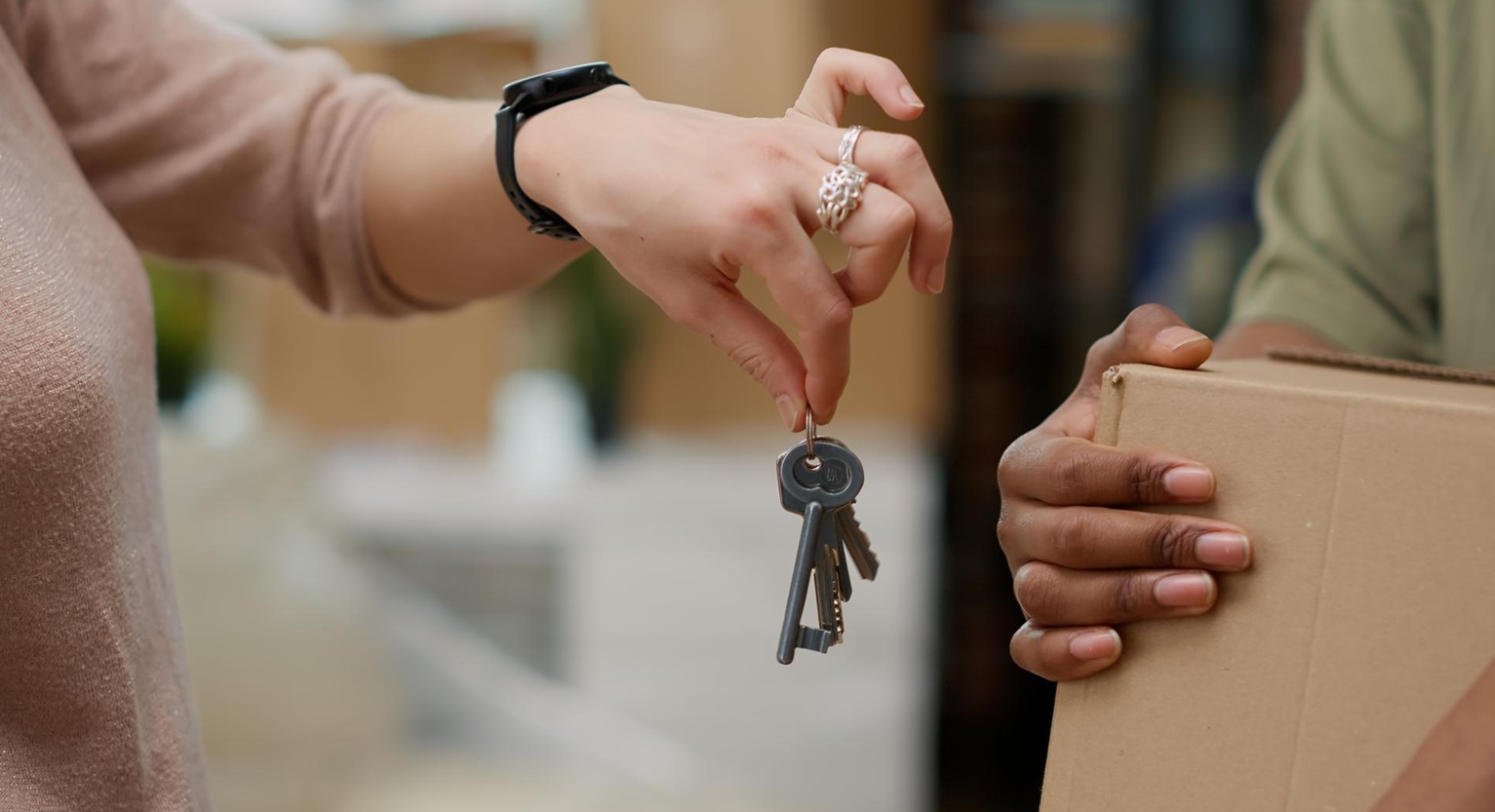
I bought her the house because it was the last practical thing I could think of to do for her, and because houses are the kind of thing that cannot leave. I know how that sounds. I know how much of my own history is folded into that sentence. But Nancy had grown up in a life where the people who were supposed to stay sometimes didn’t, and I wanted to give her something that would be there every morning when she woke up, regardless of anything else. Something with her name on the deed. Something that owed her nothing and asked nothing and simply existed for her.
She cried when I told her. She turned away for a moment first, collecting herself, and then turned back and cried anyway, which she almost never did.
I found the plaque later, the one Mark had seen in the back bedroom. The man who chose to stay. She had put it on the wall above the desk she was going to use for her freelance work, in the room with the good north light that she said was best for screen work. She had hung it there before the party, before the guests arrived, before Jacob arrived, before any of it.
I stood in that room for a while, alone, while music and voices moved through the rest of the house.
Jacob worked the party with the ease of someone who is genuinely good at parties. He laughed at the right moments and listened with his whole body and touched his chest when anyone mentioned family, as if positioning himself inside the word before it could exclude him. My sister Linda found him charming. Most people did. He was not, as far as I could tell, a dishonest person. He was a stranger who had done a consequential thing twenty-seven years ago by not being present, and who was now, for reasons I did not fully know, choosing to be present, and trying to do it gracefully in a room where graceful was a difficult standard to meet.
At one point, a woman I barely knew leaned toward him near the kitchen doorway and nodded at the room around them.
“You must be so proud,” she said. “This house. The way she’s turned out.”
Jacob’s smile did not change. “I try,” he said.
The words landed in my chest like something falling from a height.
Across the room, Nancy heard it. I saw the small movement of her head, the almost imperceptible filing away of information, the same look she had given me at five years old when she was deciding how much of the world to let in.
A few minutes later, she tapped her glass.
The room gathered itself. Conversations finished and faces turned toward her, and she stood in the middle of her own living room in the house that was now hers, in the life she had built around herself the way people build lives when they understand that no one else is going to build it for them.
“I want to do a toast,” she said, and the warmth in her voice made the room warm too. “And if you keep talking, I’ll start throwing olives.”
Laughter moved through the group, real laughter, the kind that signals a room trusting the person who made it happen.
Jacob straightened slightly. I saw him do it. He was positioning himself for something, and the thing he was positioning himself for was, I could tell, a moment he had perhaps imagined on the drive over or in the days leading up to tonight. The moment the room looked at him as a father.
Nancy lifted her glass.
“I’m grateful to be standing in this house,” she said. “Grateful for everyone who came tonight. And I want to say something about my father.”
Jacob’s smile widened by a fraction. His shoulders settled.
“I don’t mean my biological father,” Nancy said, and her voice was clear and unhurried and entirely without cruelty, the kind of clarity that is gentle precisely because it does not need to be cruel to be true. “I mean the one who chose me. The one who stayed for my entire life.”
The room stilled.
Not the awkward stillness of a moment gone wrong, but something more like the stillness of people paying close attention to something worth paying attention to.
Jacob’s expression shifted. I watched it happen from across the room. The smile held its shape for a second longer than was natural, and then something underneath it changed, like a structure settling under weight it was not designed for.
Nancy’s eyes found mine.
“Bruce is my father,” she said. “He picked me up when I was three years old and did not put me down. He showed up every morning and stayed every night. He paid for my education without letting me feel the weight of that. He bought me this house, and when I say this house is more than a house, that’s what I mean. It is evidence of a love that started before I could have understood what love was, and that has never required anything from me except that I try.”
I swallowed hard.
“He did all of this after Julia left,” she said, and her voice stayed steady in the way of someone who has prepared for a moment and is now living it carefully. “He did it alone, and he did it without ever once making me feel like a burden or a replacement or a consolation prize. He made me feel like a daughter.”
The room was very quiet.
“This house is not just a gift,” she said. “This house is him. It is what it looks like when someone loves you for twenty-seven years without stopping.” She paused, and when she spoke again her voice was softer. “To new beginnings, and to Bruce, my dad, who built me a home long before he ever bought me one. You are the only person I have never had to wonder about.”
The applause started in pieces and then came together, and I stood there with my throat closed and my eyes burning and my hands doing nothing useful at my sides.
Nancy crossed the room.
She put her hand in mine the way she had not done since she was small, the way children do before they grow out of it and adults rediscover when they need to, and held on.
I did not say anything for a moment. There was nothing that needed saying.
When I finally looked up, Jacob was standing near the window with his drink held loosely, watching us. His face had rearranged itself into something quieter, something more honestly his own than the performance of the past two hours. He caught me looking and did not look away.
“I didn’t earn that,” he said, and it was low enough that it barely reached me across the room, low enough that it sounded less like something he intended to announce and more like something he was telling himself for the first time.
I nodded once. Not to agree, not to dismiss, just to acknowledge that he had said a true thing.
Nancy squeezed my hand.
Later, after the party had wound itself down and the guests had gone in small groups, saying warm things at the door, Nancy and I sat at her kitchen table with two mugs of tea and the comfortable quiet of people who have been doing this together for a long time.
She wrapped both hands around her mug.
“I should have told you he was coming,” she said. “I almost did. And then I was afraid of what might happen to your face when I said it.”
“My face is fine.”
“Your face was not fine when you dropped the ice.”
I laughed, which felt good, the way laughing does after an evening that has asked a lot of you.
“Why tonight?” I asked. “Why here?”
She thought about it. The kind of thinking she had always done before answering, slow and honest, the thinking of someone who prefers accuracy to speed.
“Because this is my house,” she said. “My place. I wanted to meet him somewhere that was already mine before he arrived in it.” She turned the mug between her palms. “I wanted to know what it felt like to have him in a room where I was already the person who got to decide things.”
I looked at my daughter, this woman who had been a three-year-old at a doorway once, testing the floor, deciding whether to come inside.
“And?” I said.
She considered.
“He seems like he is trying,” she said carefully. “I think he feels bad about the years. I think he would like to matter to me. I don’t know yet whether I can give him that.” She looked up. “But I know who my father is, Dad. I have known that since I was five years old. That was never the question.”
I put my hand over hers on the table.
Outside, the street was quiet. The lights in the neighboring houses had mostly gone dark. Through the kitchen window I could see the dogwood in her small backyard, bare still, waiting for spring with the patience of things that trust the season will come back around.
“She didn’t deserve you, you know,” Nancy said. “Julia. She should have stayed.”
“She made a choice that was honest,” I said. “It hurt, but it was honest.”
Nancy was quiet for a moment.
“You didn’t leave,” she said.
“No.”
“You could have.”
I looked at her. “I did not want to.”
She nodded slowly, the way she nodded when she had been told something she already believed and was glad to have confirmed.
“I know,” she said. “That’s the whole thing, Dad. You didn’t want to leave. That’s different from just not leaving.”
I thought about the night I had sat beside her bed in the dark with Julia’s note crumpled in my fist, my daughter asleep under her pink blanket with her hand curled against her cheek. I had sat there for a long time. I had thought about what the note meant and what came after it and what kind of life I had now and what kind of life Nancy had. I had thought about all the ways a person could respond to the moment they were in.
And then the morning had come and Nancy had asked me if I was leaving, and I had looked at her face, and the answer had simply been no. It had not been a sacrifice. It had not been a decision made through gritted teeth or a good impulse that cost me something I wanted more. It had been, without drama or ceremony, the truest answer I knew.
We sat at her kitchen table until the tea was cold. She told me about the room she was going to set up for client work and the friend who was helping her build a proper website and the little garden she was hoping to start in the backyard as soon as it was warm enough.
She talked like someone who was already living in the future she was describing, because she was.
I drove home through quiet streets. The city was ordinary and peaceful around me, the way cities are at that hour when most people have decided the day is over. I had the window down a little, and the night air came in cool and clean, and I drove without the radio because I wanted to think.
I thought about Nancy at three years old testing the floor of our doorway.
I thought about her at five, asking the question I had not known how to answer except with my entire life.
I thought about the bicycle, the back of the seat in my hand, the moment I let go.
I thought about Jacob standing at the window with his drink, saying something quietly true to himself, probably for the first time.
I thought about the plaque in the back bedroom. The man who chose to stay.
She had bought it before she knew how tonight would go. She had hung it before the guests arrived and before the toast and before any of it, because she had already known what she wanted to say. She had been building toward it, probably for longer than I understood.
I had bought her a house to give her something that could not leave.
What I had not understood, until she put her hand in mine at the end of her own party in the middle of her own life, was what she had been building for me in return.
Not a room. Not a gift wrapped in good paper. Something that cannot be purchased or replaced or taken back.
The knowledge that I had been the right person for her. That out of everything that had been uncertain and everything that had not stayed and every blank line on every form that should have held a name, she had looked at me across twenty-seven years and decided: him. That one.
You can give a child a home and not know you are building one for yourself at the same time.
I know now.