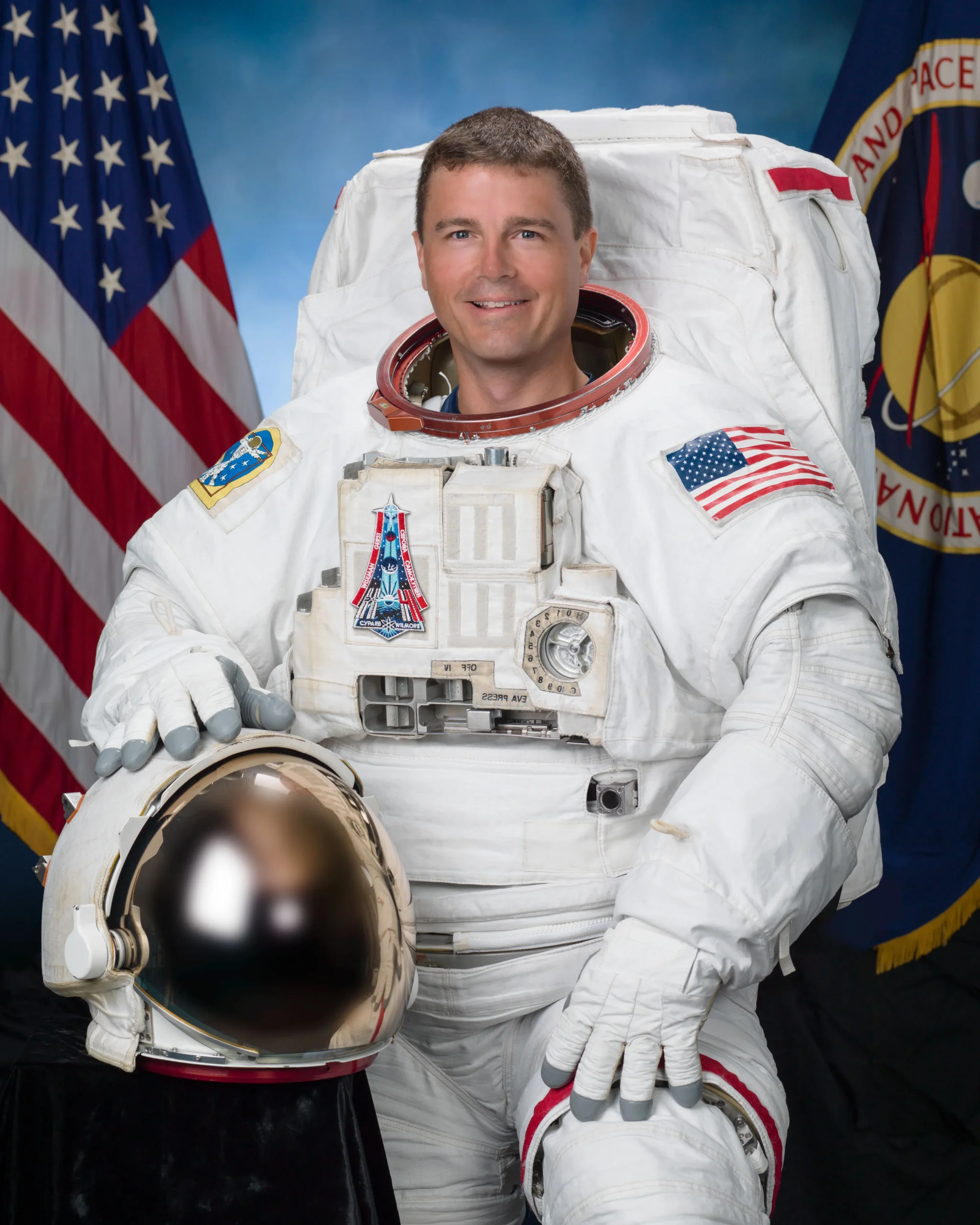
In a moment that has captured global attention and stirred a renewed sense of wonder about our place in the universe, Reid Wiseman, a veteran astronaut and commander associated with NASA, has shared breathtaking insights into what Earth and the Moon truly look like from space. His reflections, paired with stunning visuals, are not just scientifically significant—they are deeply emotional, philosophical, and transformative.
A Perspective Few Will Ever Experience
For most people, Earth is everything: home, history, identity, and future. But for astronauts like Wiseman, stepping beyond the boundaries of our planet offers a radically different perspective. From orbit, Earth is no longer divided by borders, politics, or conflicts. Instead, it appears as a delicate, luminous sphere suspended in the vast darkness of space.
Wiseman described the view as “humbling beyond words.” From his vantage point, continents blend seamlessly into oceans, weather systems swirl in real time, and the thin atmosphere—so vital to life—appears as a fragile blue line hugging the planet. It is a reminder of both the beauty and vulnerability of Earth.
He emphasized that seeing Earth from above changes how one thinks about humanity. “You don’t see countries. You don’t see divisions. You see one planet, one home,” he noted in his remarks.
The Moon: A Silent Companion
Equally captivating is the view of the Moon from space. While people on Earth are accustomed to seeing it as a distant, glowing object in the night sky, astronauts witness it in an entirely different way. From orbit, the Moon appears as a textured, cratered world—silent, ancient, and starkly beautiful.
Wiseman explained that the Moon, when viewed from space, feels both close and distant at the same time. Its gray, rugged surface contrasts sharply with Earth’s vibrant blues and greens. This contrast highlights the uniqueness of our planet as a life-supporting oasis in an otherwise barren cosmic environment.
The relationship between Earth and the Moon becomes more tangible from space. Astronauts can observe how the Moon’s gravitational pull influences tides and how its presence has shaped Earth’s evolution over billions of years.
Technology Making the Invisible Visible
The images and footage shared by Wiseman were made possible through advanced imaging technology aboard spacecraft and the International Space Station (ISS). High-resolution cameras, enhanced sensors, and real-time transmission systems allow astronauts to capture and share these extraordinary views with people on Earth.
These technological advancements are not just about aesthetics—they play a critical role in scientific research. Observing Earth from space helps scientists monitor climate change, track natural disasters, and study atmospheric conditions. Similarly, detailed observations of the Moon contribute to future exploration plans and a deeper understanding of our solar system.
Wiseman highlighted how important it is to share these views with the public. “If everyone could see what we see, even for a few minutes, it would change how we treat our planet,” he said.
Emotional Impact on Astronauts
The experience of seeing Earth from space often leads to what astronauts call the “Overview Effect.” This cognitive shift involves a profound sense of connection to the planet and a realization of its fragility.
Wiseman described moments of quiet reflection while looking out at Earth. Floating in microgravity, with the vastness of space surrounding him, he found himself thinking about humanity’s shared future. The absence of noise, combined with the visual magnitude of the view, creates a powerful emotional experience.
Many astronauts return to Earth with a renewed sense of purpose, often becoming advocates for environmental protection and global cooperation. Wiseman is no exception. His message is clear: Earth is precious, and it is up to humanity to protect it.
A Message for Humanity
Beyond the visuals and scientific insights, Wiseman’s revelation carries a deeper message. In a world often divided by conflict and misunderstanding, the view from space offers a unifying perspective.
He stressed that the challenges facing humanity—such as climate change, resource depletion, and global inequality—cannot be solved in isolation. From space, these issues appear interconnected, reinforcing the idea that cooperation is essential.
“From up here, it’s obvious—we’re all in this together,” Wiseman said. “There is no ‘us’ and ‘them.’ There is only us.”
This message resonates strongly in today’s global context. As technology brings people closer together, the need for collective action becomes increasingly urgent.
Inspiring the Next Generation
One of the most significant impacts of Wiseman’s revelation is its potential to inspire future generations. Images of Earth and the Moon from space have long been a source of fascination, encouraging young people to pursue careers in science, technology, engineering, and mathematics (STEM).
Wiseman believes that sharing these experiences can ignite curiosity and ambition. “Somewhere out there is a kid who will see this and decide to become an astronaut, a scientist, or an engineer,” he said.
Educational initiatives supported by NASA aim to make space exploration more accessible and inclusive. By sharing real experiences from astronauts, these programs help bridge the gap between imagination and reality.
The Role of Space Exploration
Wiseman’s insights also highlight the broader importance of space exploration. Missions to space are not just about discovery—they are about understanding our place in the universe.
Exploration of the Moon, for example, is a key step toward future missions to Mars and beyond. By studying the Moon’s surface, scientists can develop technologies and strategies for long-duration space travel.
At the same time, observing Earth from space provides critical data for addressing challenges at home. Satellite systems monitor environmental changes, support disaster response, and improve communication networks worldwide.
Wiseman emphasized that investment in space exploration yields benefits that extend far beyond the boundaries of space itself.
A Renewed Appreciation for Earth
Perhaps the most powerful takeaway from Wiseman’s revelation is a renewed appreciation for Earth. Seen from space, the planet’s beauty is undeniable—but so is its fragility.
The thin atmosphere, the limited resources, and the delicate balance of ecosystems all become more apparent from orbit. This perspective underscores the importance of sustainable practices and responsible stewardship.
Wiseman’s message is not one of fear, but of hope. He believes that humanity has the ability to address its challenges, provided there is a willingness to work together.
Global Reaction
The images and insights shared by Wiseman have sparked widespread reaction across the globe. Social media platforms have been flooded with comments, with many people expressing awe, gratitude, and a renewed sense of connection to Earth.
Scientists, educators, and environmental advocates have praised the revelation as a powerful tool for raising awareness. By combining visual impact with a compelling message, Wiseman has succeeded in reaching a broad audience.
The response highlights the enduring fascination with space and the profound effect it can have on human perspective.
Looking Ahead
As space exploration continues to evolve, more people may have the opportunity to experience views like those described by Wiseman. Advances in commercial spaceflight could make space travel more accessible in the coming decades.
However, Wiseman believes that even those who never leave Earth can benefit from the perspective offered by space exploration. Through images, videos, and stories, it is possible to share the experience in a meaningful way.
He hopes that his revelation will serve as a reminder of what truly matters: the preservation of our planet and the unity of its people.
Conclusion
The view of Earth and the Moon from space is more than just a visual spectacle—it is a powerful reminder of our shared existence. Through his words and images, Reid Wiseman has offered the world a glimpse of something extraordinary.
His message transcends science and exploration, touching on the fundamental question of what it means to be human. From the vastness of space, the divisions that often define life on Earth fade away, leaving behind a simple truth: we are all part of one planet.
As humanity looks to the future, this perspective may prove to be one of the most valuable insights of all.