What Remained After the Wreck
The worst sound was not the crash.
People assume it was. They picture the brakes, the steel folding, the truck’s horn tearing through the Wednesday afternoon on Interstate 5. They picture the spin across three lanes, the concrete barrier, the white flash of impact. They imagine that must be the sound that stayed.
It was not.
The sound that stayed was a soft chime. One text notification, in a trauma bay at Harborview Medical Center, while blood dried in my hair and a chest tube pulled pain through my ribcage with every breath.
I had sent eleven words to my father.
Dad, I was in an accident. I’m at Harborview ER. Please come.
The nurse was holding my phone because my hands would not cooperate with the shaking. I watched her face as she read the reply. She had the practiced neutrality of someone who manages other people’s pain for a living. I watched that neutrality work very hard for a moment.
Then she turned the screen toward me.
I’m at lunch with Charlotte. Can’t just leave. Call an Uber.
The monitors kept beeping. Someone two curtains away needed a blood pressure cuff. A cart rattled down the corridor. The hospital continued its exact, ordinary motion as though nothing had been decided.
That was the cruelest part. The world did not stop.
Only I changed.
Something separated in me, cleanly and permanently, from the life I had spent twenty-eight years defending.
My name is Caroline Irwin, and until that Wednesday I was the hidden spine of my father’s company.
Irwin Holdings.
Tyler Irwin’s empire. His name on the permits, the award plaques, the waterfront renderings, the magazine profiles, the black-tie speeches, the donor walls, the skyline pieces where journalists called him Seattle’s visionary developer. He loved that word. Visionary. He wore it the way some men wear tailored suits, as a way of telling a room who to see before they had time to look for themselves.
In public, he spoke about urban renewal, sustainable design, community integration, responsible density, and the future of Pacific Northwest architecture.
In private, he could not calculate a load path without asking me to check it. He did not know which stormwater systems would survive shoreline review. He did not know how many times his signature design instincts would have violated code if I had not quietly corrected them before the drawings reached the city. He had trained himself not to know, because knowing would have required him to acknowledge what I was worth.
I started at Irwin Holdings when I was twenty-three, one year out of graduate school and still raw from losing my mother. The title was Assistant Project Coordinator. I told myself titles were bureaucracy, that real work would speak eventually. My father told me I had to learn the business from the ground up, which sounded principled until I noticed the ground kept descending each time I mastered a new level.
Vendor disputes. Then permits. Then structural review. Then sustainability compliance. Then client presentations he was too busy to prepare. Then crisis calls, design revisions, investor decks, final technical architecture on three major developments. My name appeared rarely. His always appeared.
At twenty-five, I redesigned the wind-load response system for a residential tower after the original consulting team missed a facade deflection vulnerability. He presented the correction to investors as a refinement from his internal team. Internal team meant me, alone, at eleven at night with the original drawings and a legal pad.
At twenty-six, I rebuilt the Harbor District site model after a geotechnical issue threatened to kill the project. My father arrived late to the emergency meeting, repeated the three points I had written for him, and walked out with the client calling him brilliant under pressure.
At twenty-seven, I built the encrypted file architecture after a subcontractor leaked early renderings to a competitor. Restricted access, version control, backup systems, password vaults, layered permissions. My father said he had no patience for paranoid tech nonsense. Three months later, he told a breakfast panel that Irwin Holdings had the most secure project pipeline in Seattle.
The most secure pipeline in Seattle ran behind passwords only I knew.
I had not built it as a trap. That was the question people asked later, whether I had planned it. No. I built it carefully because the work was valuable and I cared about it even when it did not publicly care back. That was the habit my father had cultivated in me since I was small, the habit of covering for him, of arranging the world so that his version of things held together.
That habit had started long before the company.
My mother was alive, he was still sharp with ambition, but she softened the edges of the house. She translated him without excusing him. When he missed dinner, she said he got lost in his work. When he criticized my drawings too harshly, she came to my room afterward with tea and said he was harder on me because he saw himself in me. I believed her because children believe the parent who makes pain feel meaningful.
Then she died, and he threw himself into work with a force people mistook for strength, and I threw myself into becoming useful because grief had taken away everything else I knew how to do with my hands.
Charlotte arrived eighteen months after the funeral. Silk scarves, cream coats, small diamonds in daylight. She called my father Ty by the second dinner and touched his wrist whenever she wanted his agreement. She never shouted. That was what made her effective. She tilted her head and smiled and asked questions that sounded gentle until you noticed they all placed me slightly outside the circle. Caroline, don’t you think young people delay adulthood by hiding in work? Caroline, your father deserves peace.
Peace meant no challenge to the order she was establishing.
Her son Preston joined Irwin Holdings as Vice President of Strategic Growth after failing upward through two marketing positions. He wore Italian shoes and invoked phrases like scalable synergy in rooms where no one had asked a question. He called me Care. I hated it. Care, can you pull together the waterfront numbers. Care, Dad needs the final presentation cleaned up. Care, could you resend the structural notes, I deleted the thread.
Dad never corrected him.
At Irwin Holdings, Preston had a title. I had responsibility. That was the company structure until a Wednesday afternoon in March when a delivery truck’s rear trailer fishtailed on Interstate 5 and came into my lane.
I remember glancing at the dashboard clock. I remember a white van ahead. I remember thinking I should call Dad before he left for lunch to confirm which version of the waterfront renderings he planned to show at the upcoming gala.
Then the truck came in from the left.
Not as sound. As force. A massive hand slamming the world sideways. The steering wheel hit my chest. Glass burst at my face. My car crossed lanes and hit the concrete barrier and after that there were only fragments, a woman shouting through rain, a man in a baseball cap climbing over the barrier saying stay with me, the inability to draw breath, which was the first terror, not the blood, not the noise, just the body refusing air.
The paramedics cut the door and then my coat. They put a collar on my neck and when they moved me, pain tore through my ribs and hip so completely that I went briefly dark and came back to rain on my face and a voice telling me to open my eyes.
At Harborview, they said punctured lung. They said possible splenic bleed. They said fractured ribs. The chest tube went in and the pain it produced was the kind that makes the room feel editorial, like a narrator removing all ambiguity. Officer Dana Hayes had ridden behind the ambulance because the commercial vehicle collision involved liability questions. She had tried to reach my emergency contact twice from her own phone before I was conscious enough to try myself.
Both calls had gone unanswered.
When I asked for my phone in the trauma bay, the nurse held it while I dictated the text. When the reply came, she read it first. I watched professional composure fight with something rawer on her face, and I understood before she turned the screen.
Call an Uber.
I tried to call him directly after. The first attempt went to voicemail. The second was declined. I know the difference between those two things.
Officer Hayes was still in the bay when the emails started arriving. Preston’s message had the subject line CARE URGENT and the body said they were locked out of the secure folder and that my father was furious and this was not the time for games and I should send credentials now.
The nurse saw me staring at it.
“You don’t have to answer work right now,” she said.
I almost laughed, but laughing hurt too much.
At 4:08 in the afternoon, my father called.
A foolish piece of hope moved through me even then. Maybe he had realized. Maybe he was downstairs.
“Where are the Harbor files?”
Those were his first words.
I closed my eyes and looked at the white tile ceiling and found the small brown stain near the vent and focused on it while he explained that the situation was time-sensitive and Preston couldn’t access the marina package and the investor window was closing.
“I have a chest tube,” I said.
A pause. Then the exhale he used when contractors missed deadlines.
“I’m sorry you’re having a rough day, but we all have responsibilities.”
Rough day.
A rough day.
The phone was on speaker because my hands had weakened and the nurse had adjusted it for me. Officer Hayes had returned to the bay for a follow-up question. She stopped just inside the curtain and heard it.
My father continued. He asked me to send Preston the password. He said we could discuss the personal situation later.
The personal situation.
Something in me locked into place. Not loudly. With the clean finality of a mechanism designed to hold under pressure.
“No,” I said.
He said my name.
“No,” I said again.
His boardroom voice arrived, the tone calibrated to produce compliance.
“Do not make this difficult.”
I looked at Officer Hayes.
She was watching me with an expression I could not fully read.
“You told me to call an Uber,” I said.
His breath changed.
“That was taken out of context.”
The instinct to rewrite had arrived before the instinct to ask whether I was alive.
“Was it.”
Then I ended the call.
Later, I learned that Officer Hayes had stayed not only for the liability questions but because I had no family present, no advocate, and a head injury they were monitoring. She had seen the text. She had heard the call. She had been writing things down.
That night, after surgery was narrowly avoided and the spleen stabilized and the lung became the primary concern, I asked the nurse for my laptop bag under the pretense of retrieving my medical directive. The laptop had a dent near the corner from the crash but powered on. I spent two hours doing what I should have done a year earlier, which was stop protecting people from the consequences of their own negligence.
I did not delete files. I did not damage anything. I downloaded authorship documentation to my personal protected archive. Version histories, timestamped structural comments, design notes, original schematics, sustainability calculations, all of it showing my role across five major projects. The receipts of my invisible labor. I had started building this archive six months earlier, after my father removed my name from the Harbor District submission and replaced it with Preston’s. My attorney Leah Cho had told me then: you are not paranoid, you are underdocumented. Fix that.
I had been fixing it.
At 2:12 in the morning, I forwarded everything to Leah.
Her reply came in minutes.
Are you safe?
The first message all day that had asked the right question.
When she called, her voice was calm over something that was not calm.
“Do not send them passwords,” she said.
“I’m not.”
“Do you authorize me to issue preservation notices?”
“Yes.”
“Caroline. Your father just created a timeline no defense attorney wants to explain.”
Officer Hayes came by before her shift ended that Thursday. She stood beside the bed and asked how I was feeling. I told her I felt like I had been hit by a truck. She smiled at that, faintly.
Then she told me she had a public safety presentation Friday night at the Harbor District gala. She said her remarks would include the I-5 collision because it involved commercial vehicle responsibility and emergency response. She said she was in the business of accurate reporting. She said sometimes people needed to hear what abandonment sounded like when it had a timestamp.
“Will you read it?” I asked.
“If you consent.”
Three days earlier I would have invented an excuse for him. He was in a meeting. He misunderstood the severity. He loves me in his way.
In his way. Two words that had carried too much weight for too many years.
I turned toward her.
“I consent,” I said.
The doctor strongly opposed my attending. The nurse was unambiguous about it. Leah called it medically reckless and strategically historic. I was discharged Friday afternoon with a cane, compression wrap, medication, and a list of symptoms requiring immediate return.
I wore a black dress and a long coat and flat shoes. Leah drove.
Outside the Four Seasons, she asked if I wanted to turn back.
I looked at the glowing entrance and the valet stand and the soft rain making the pavement golden.
Inside, my father was probably already performing his version of the evening. Dark suit. Silver tie. Charlotte in something that photographed well. Preston near investors with his glass raised, borrowing the confidence of a room built with work he had never done.
“I’m done staying out of rooms where my work is being sold,” I said.
Leah nodded once. “Walk slowly. Pain makes people underestimate you. Use that.”
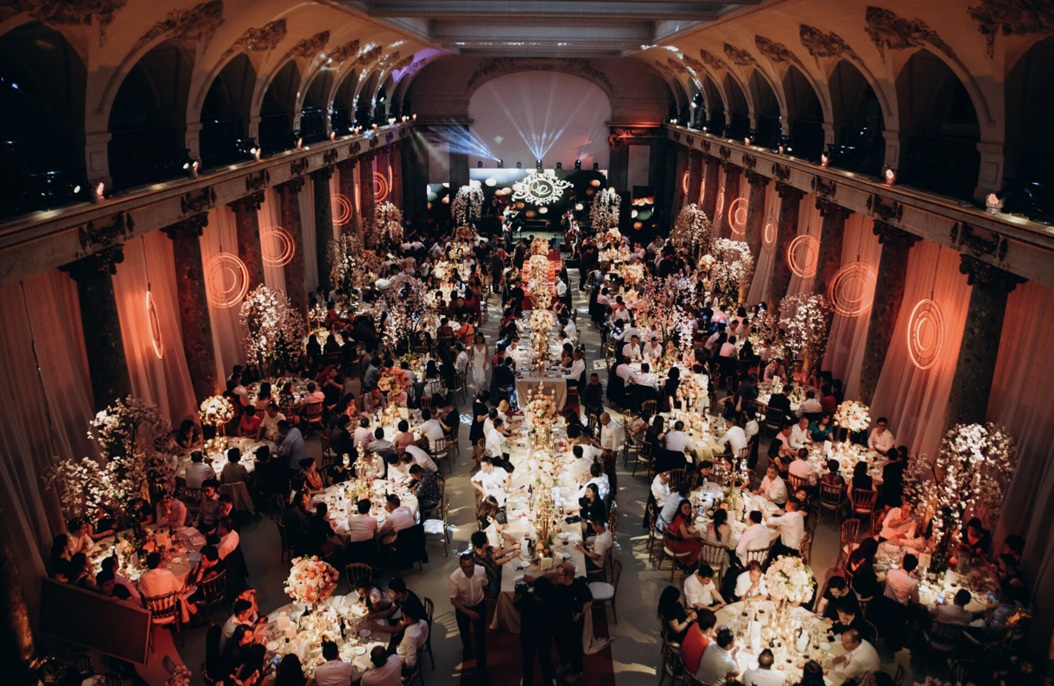
The ballroom held two hundred people. Behind the stage, a rendering of the Harbor District project glowed on the screens. My rendering. My waterfront model. My stormwater-integrated terrace system and load diagrams translated into art for people holding cocktails. My father sat at the front table with Charlotte on his right and Preston on his left.
He did not see me at first.
Charlotte did.
Her smile collapsed before she had time to manage it. Preston followed her gaze. Then my father.
For one moment he looked confused. Not concerned. Confused, the specific expression of a man who has arranged the room and found an unexpected object in it.
He stood halfway. I kept walking. The cane tapped twice on the ballroom floor. Conversations thinned around me. People turned. Some knew who I was, some did not. The assistant. The daughter. The quiet one with the answers who never had the title.
Dad approached with his social smile fixed.
“Caroline.” Through his teeth. “What are you doing here?”
I looked at him fully, at the man who had taught me to read blueprints and then spent twenty years borrowing mine.
“Attending the gala,” I said.
“You should be resting.”
“Should I.”
His jaw tightened. Charlotte arrived and said I looked unwell in a voice calibrated for nearby donors. I told her I had been in a major car accident. Several faces turned. Her eyes moved toward them. She said quickly that they had all been so worried. Behind me, Leah made a sound that was not quite a laugh.
The lights dimmed before my father could find another angle. The host welcomed everyone. Dad returned to his table because reputation is a leash men like him manufacture for themselves.
The speeches were what those speeches always are. Transformation, sustainability, partnership, the future. Dad smiled at the appropriate moments. Preston nodded at things he did not understand.
Then the host introduced Officer Dana Hayes.
She walked to the podium in dress uniform, calm, with a folder.
She began with traffic safety and commercial vehicle responsibility. She described the I-5 collision without naming me. She discussed emergency response. Then she said that in trauma care they talked about the golden hour, but there was another hour that mattered, the hour after a patient became conscious enough to ask for family.
My father’s shoulders changed.
Officer Hayes opened the folder.
“Three days ago, a young woman involved in that collision asked us to contact her emergency contact from Harborview Medical Center. Her father.” She paused. “With her consent, I am going to read the exchange, because it illustrates something we do not discuss enough: abandonment during medical crisis.”
My father stood.
His chair scraped.
Officer Hayes looked at him.
“Sir, please remain seated until the presentation is complete.”
Tyler Irwin, who had not been stopped in public in twenty years, sat back down.
Officer Hayes read my text.
Dad, I was in an accident. I’m at Harborview ER. Please come.
Two hundred people in the room. Complete silence.
Then she read his reply.
I’m at lunch with Charlotte. Can’t just leave. Call an Uber.
The silence that followed was the same silence I remembered from the moment the car stopped moving on Interstate 5 and the world held itself before the screaming began. That silence had been physical, a pause before consequence. This one was moral. It had a different weight.
Officer Hayes did not add commentary. She described the injuries being treated at the time the message was sent. Punctured lung, fractured ribs, suspected internal bleeding, head trauma. She noted that follow-up calls from emergency personnel had been declined. She noted that business communications requesting password access had followed within hours.
A murmur moved through the room.
Dad stood again. “This is inappropriate.”
Officer Hayes looked at him with professional calm. “What is inappropriate, Mr. Irwin, is treating emergency care as a scheduling conflict and then treating the injured person as an asset to be accessed.”
Someone at a back table made a sound.
Then Leah stepped forward, and the room understood that it was about to change in a different way.
She did not need a microphone. Her voice carried.
She represented me in matters of intellectual authorship, employment misclassification, project attribution, and protected technical access relating to the Harbor District development. She had preservation notices ready. She had documentation ready. She had everything I had spent six months quietly building ready.
Dad turned to me.
“What have you done.”
The same question men ask when they are not sorry for what they did, only stunned that the person they did it to had been keeping records.
I stepped forward. The cane clicked.
“I stopped covering for you,” I said.
The Harbor District deal did not close that weekend. The client invoked a review clause pending authorship verification. The investors demanded audit trails. The audit trails showed my name. Repeatedly, irreversibly, embedded in the metadata of every file that made the project possible.
Original model creation. Calculation revisions. Compliance notes. Rendering corrections. Environmental response framework. Secure folder architecture. Crisis memos. Every invisible hour had left fingerprints.
Dad claimed exaggeration. The files disagreed. Preston claimed supervision of my work. His emails disagreed. Charlotte told people the family had been under strain. The text message disagreed.
Within two months, the deal restructured away from Irwin Holdings leadership unless I remained attached as independent technical authority. I refused under the original terms. The board looked closer at the company’s finances than they had in years. Lenders looked too. The Harbor District project had been the centerpiece, the proof that Tyler Irwin still controlled Seattle’s future. Without it, what remained was debt, delayed payments, and a company that had been more dependent on my invisible labor than anyone except me had understood.
He resigned before the board could formalize the removal. He called it a transition.
I was offered an executive role, equity, title, full authorship recognition.
Five years too late, and at an institution whose culture I now understood completely.
I turned it down.
I created my own firm instead, with Leah as my first investor and her name beside mine on the door, because she had asked all the right questions when no one else was asking any.
Our first client was the Harbor District consortium. Not Irwin Holdings. Me.
At the first meeting, when the client lead said they wanted my vision, I had to look down for a moment. Not from being overwhelmed. Because for the first time, no one had said my father’s name before mine.
Six months after the crash, I agreed to meet my father in a café near Lake Union.
He walked in looking older. Alone. No Charlotte, no Preston, no assistant. Just Tyler Irwin in a gray coat, holding himself like a man who had lost his audience and still could not understand where it had gone.
We sat across from each other for a moment without speaking.
Then he said he hadn’t known how bad it was.
“You declined my call,” I said.
He looked at the table. “I thought you were being dramatic.”
There it was. The root of everything. The belief that my pain was performance. That my need was manipulation. That his daughter’s blood in a trauma bay was less real than the discomfort of interrupted lunch.
“You thought I was being dramatic from the emergency room,” I said.
His eyes closed.
“I know.”
“I don’t think you do.”
The café moved around us. Rain on the window. A student at the next table working with fierce concentration on something that had nothing to do with us.
He said he had lost the company.
I corrected him. He had lost control of it.
The correction landed on him.
Then he said he had lost me.
I had imagined those words for years. I had imagined them healing something. I had imagined the apology opening some daughter-place in me that had always wanted to believe he was capable of choosing me.
But the words did not undo the trauma bay. They did not give back the five years of work that had lived in his name. They did not reach through the text on the screen.
“I think,” I said, “you lost me before I-5.”
His face held real pain. I did not rescue him from it.
“I loved you,” he said.
“I believe you loved the version of me that made your life easier.”
He flinched. That was honest enough to land.
I stood, using the table edge for balance. His hand moved toward me and then stopped. That restraint was the most self-aware thing he had done.
“I’m not ready to forgive you,” I said.
“Will you ever be?”
I looked at the rain.
“I don’t know.”
That was the truth. Not cruelty. Not performance. The actual answer.
I left him there with it.
Some months later, Officer Hayes came to the opening of the redesigned Harbor District public access promenade. Not in uniform. As a guest, standing near the back in a navy suit, watching people walk along the new railing with their faces turned toward the water.
I crossed to her without the cane. Slowly, but without it.
“You look better,” she said.
“I am.”
We stood for a moment watching the promenade fill with the ordinary beautiful noise of people in a space well-designed for being human in. Children pressing against the railing. The plantings moving in the wind. The drainage system invisible beneath stone and soil, doing its structural work without announcement.
“I never properly thanked you,” I said.
She shook her head. “You did the hard part.”
“Which part?”
“You let the truth be heard.”
The crash had broken my ribs and punctured my lung and left scars that still pull when it rains. I carry them. I expect I always will.
But the truck was not what ended Tyler Irwin’s version of himself.
His own text did that. His own priorities. His belief that I would always come through and always cover and always send the password and always protect him from the cost of being exactly who he was.
He thought the accident on Interstate 5 was the thing that changed everything.
He was wrong.
The real collision happened forty minutes later, in a trauma bay, when a soft chime sounded in a room full of machines and a nurse turned a phone screen toward a patient with blood in her hair.
That was the moment I stopped editing his story.
That was when mine finally began.